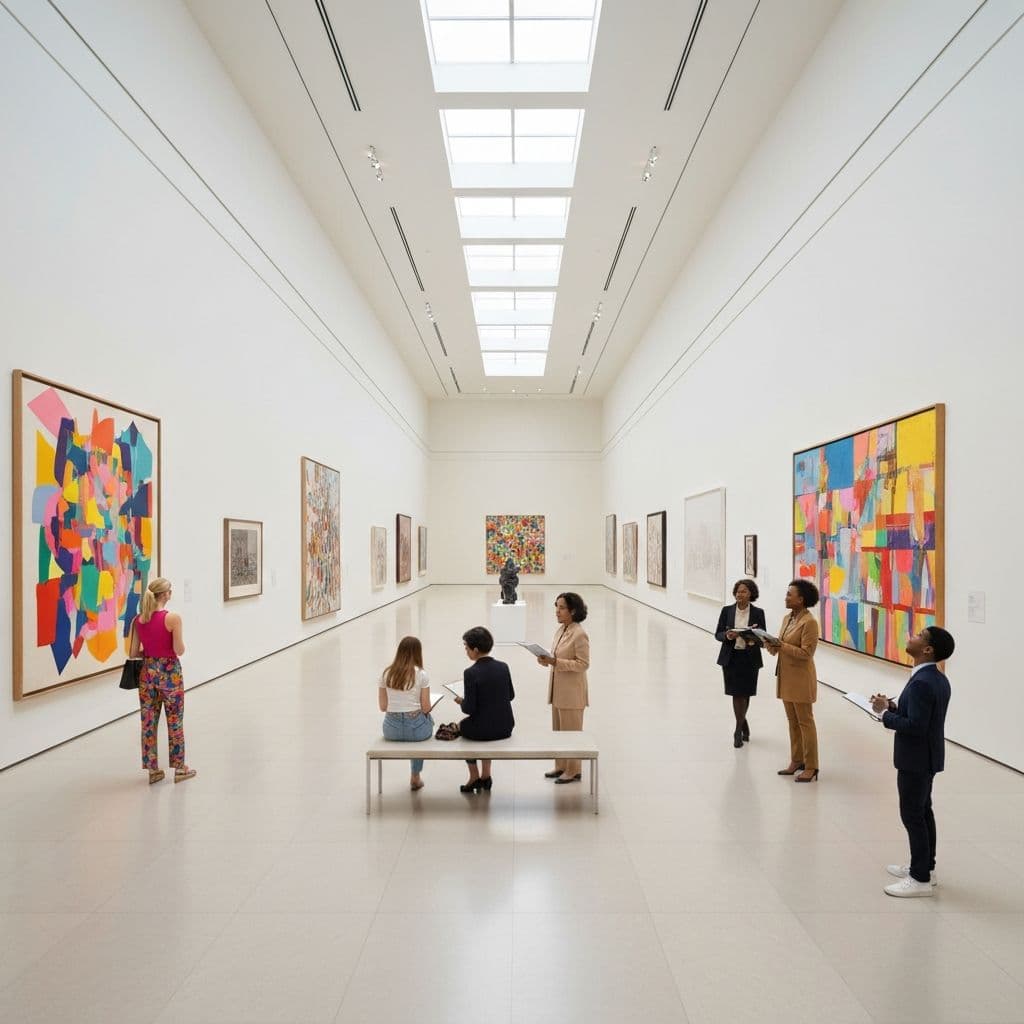
Doodling and Art Journaling: A Simple Way to Capture Creative Moments
Art journaling doesn't have to start with a finished drawing or a carefully composed page.
Sometimes it begins with something much simpler: a doodle.
A quick shape drawn while thinking. A pattern repeated without a plan. A small sketch made during a museum visit or while watching your child draw at the kitchen table.
These small drawings may seem insignificant, but when combined with art journaling, they become powerful markers of creative moments.
That idea inspired a new feature in artjournal.ing: the ability to add doodles directly to your journal entries.
Why Doodling Is Perfect for Art Journaling
Many people believe they need strong drawing skills to start an art journal.
But doodling removes that pressure completely.
A doodle can be:
- a simple spiral
- a pattern of lines
- a small character
- a shape inspired by an artwork
- a quick response to something you saw
Because doodling is spontaneous, it captures creativity in its most natural form.
For beginners especially, doodles make art journaling feel accessible and playful.
The New Doodle Feature in artjournal.ing
To support this creative habit, artjournal.ing now allows users to add doodles directly to their journal entries.
You can:
- add doodles around existing posts
- create a new entry made only of doodles
- personalize your feed with decorative patterns
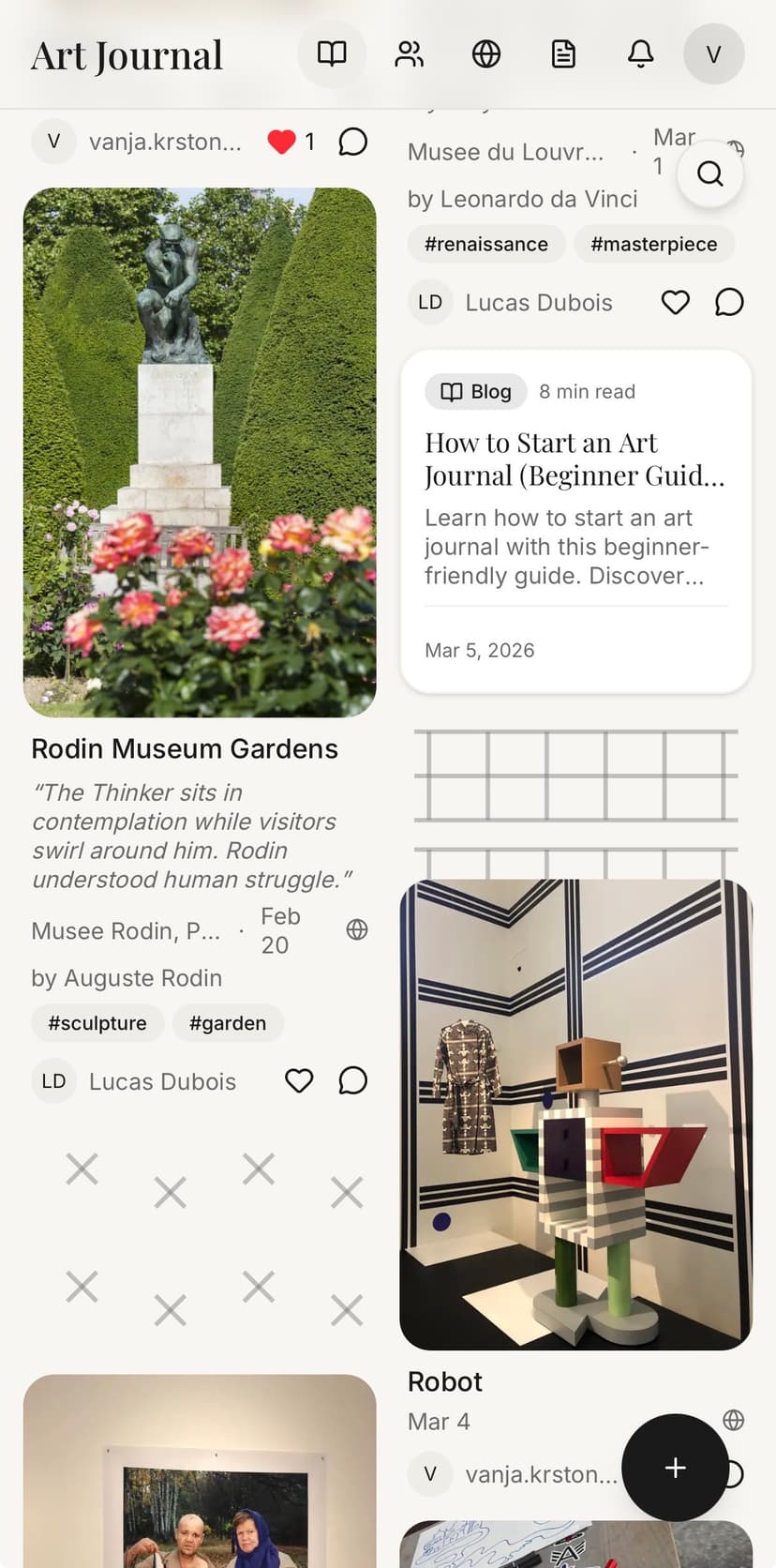
This means that even the smallest creative impulse can be recorded instantly.
For example:
- You visit an art exhibition and sketch a pattern you noticed.
- Your child draws something funny and you add a small doodle next to it.
- A color combination inspires a quick abstract shape.
Instead of letting the idea disappear, you capture it immediately.
How to Use Doodling in Your Art Journal
A simple process works best.
1. Choose a doodle pattern
When creating a new moment, tap "Add a doodle instead" to see the pattern picker. Choose from waves, hearts, stars, flowers, geometric shapes, and more.
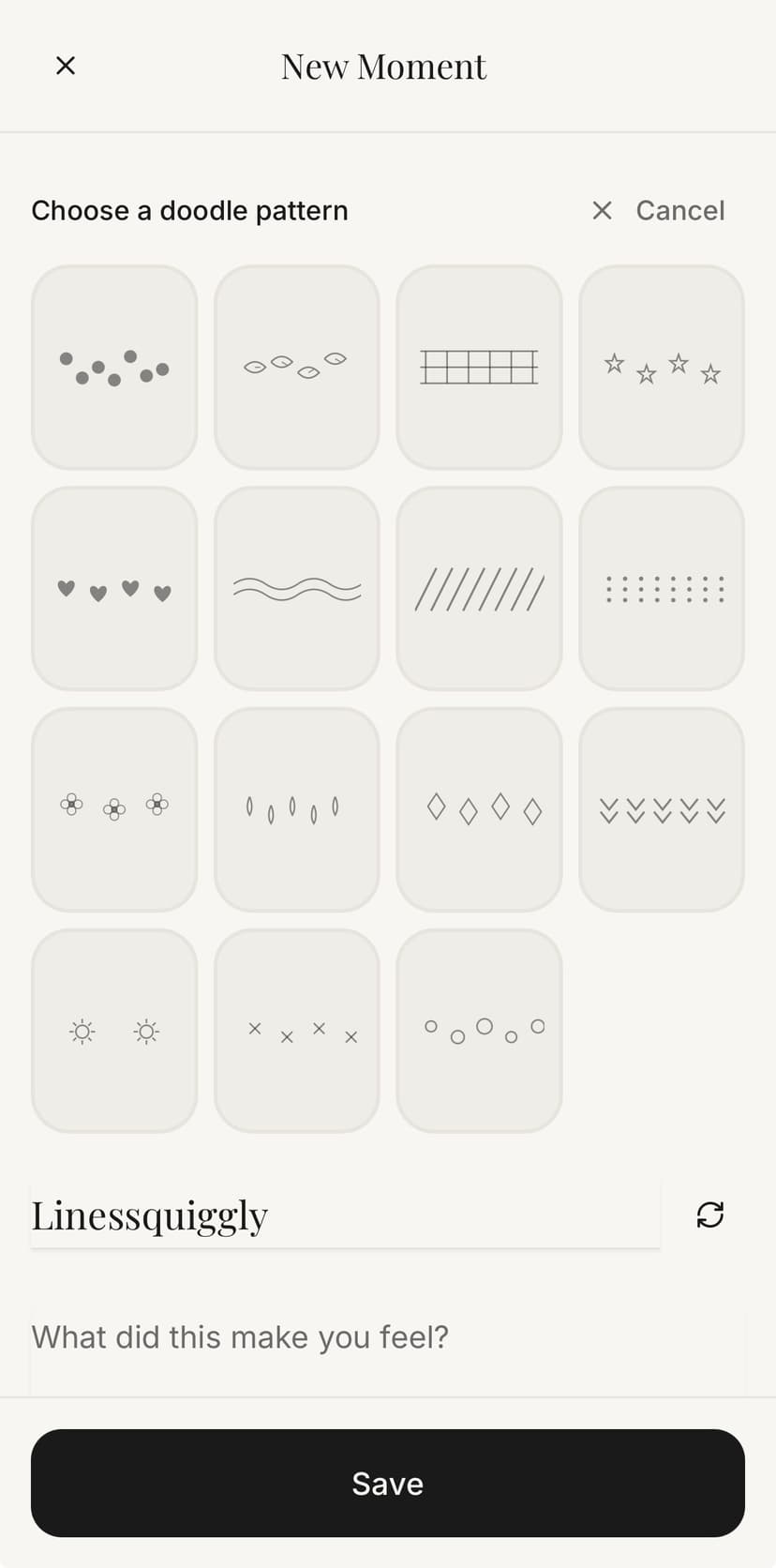
2. Get a playful name
Each doodle gets an automatically generated fun name like "Linessquiggly," "Burudoodle," or "Moodynoodle." You can regenerate the name with a tap or customize it yourself.
3. Add a short reflection
Write one short note about the moment.
Examples:
- "Inspired by a mural pattern."
- "My son said this looks like a dragon."
- "Trying a new shape idea."
4. Move on
The goal is not perfection.
The goal is to build a creative habit.
Why Small Creative Habits Matter
Many beginners stop art journaling because they expect every page to be impressive.
But creativity works differently.
Small actions repeated regularly create progress.
- A quick doodle today.
- Another one tomorrow.
- A few notes next week.
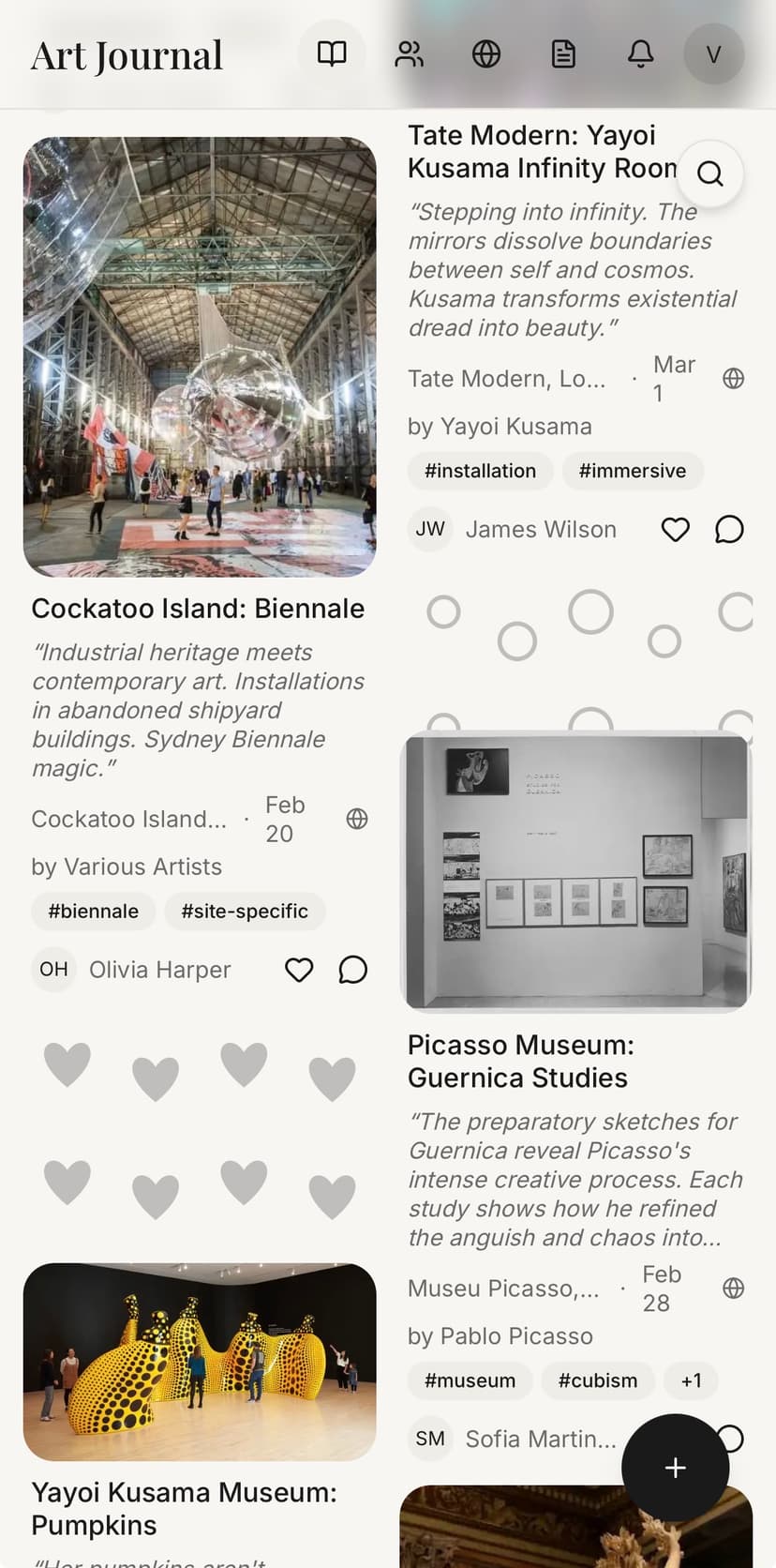
Over time, these entries form something valuable: a visual timeline of your creative thinking.
Looking back through your journal later becomes deeply satisfying. You start seeing patterns, ideas evolving, and confidence growing.
Doodling as a Creative Memory
Doodles may be simple, but they often capture something important.
- A moment of inspiration.
- A reaction to a painting.
- A spontaneous drawing from your child.
By combining doodling with art journaling, these small creative sparks become part of your story.
That's the spirit behind artjournal.ing.
A place where even the smallest creative mark - a doodle, a note, a sketch - can be saved and revisited later.
Because creativity doesn't always arrive as a finished artwork.
Sometimes it begins with a single line.
Have questions about doodles?
Check out our FAQ section for detailed answers about how to add, save, and customize doodles in your journal.
Read the Doodle FAQ →