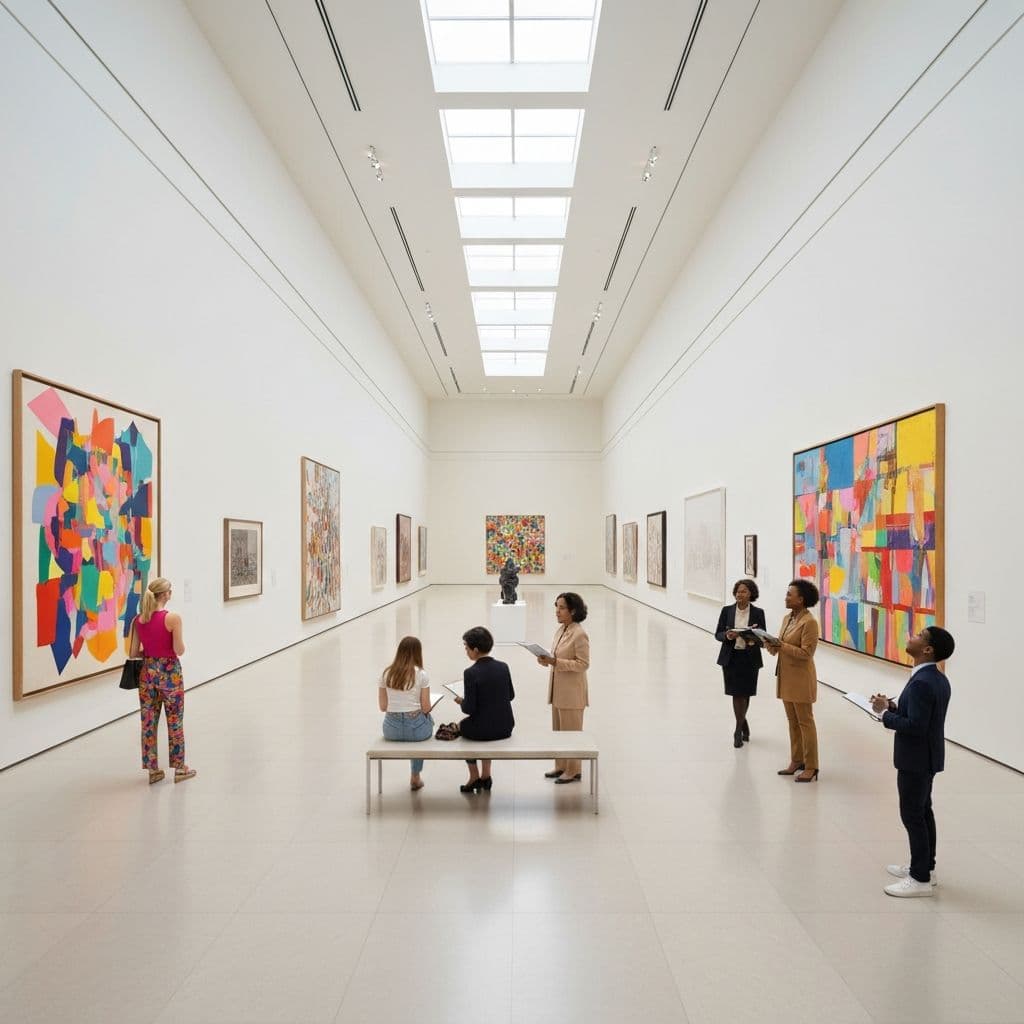
From Seeing to Making: How Art Journaling Connects Reflection and Self-Expression
A gentle guide to expressing yourself through amateur art
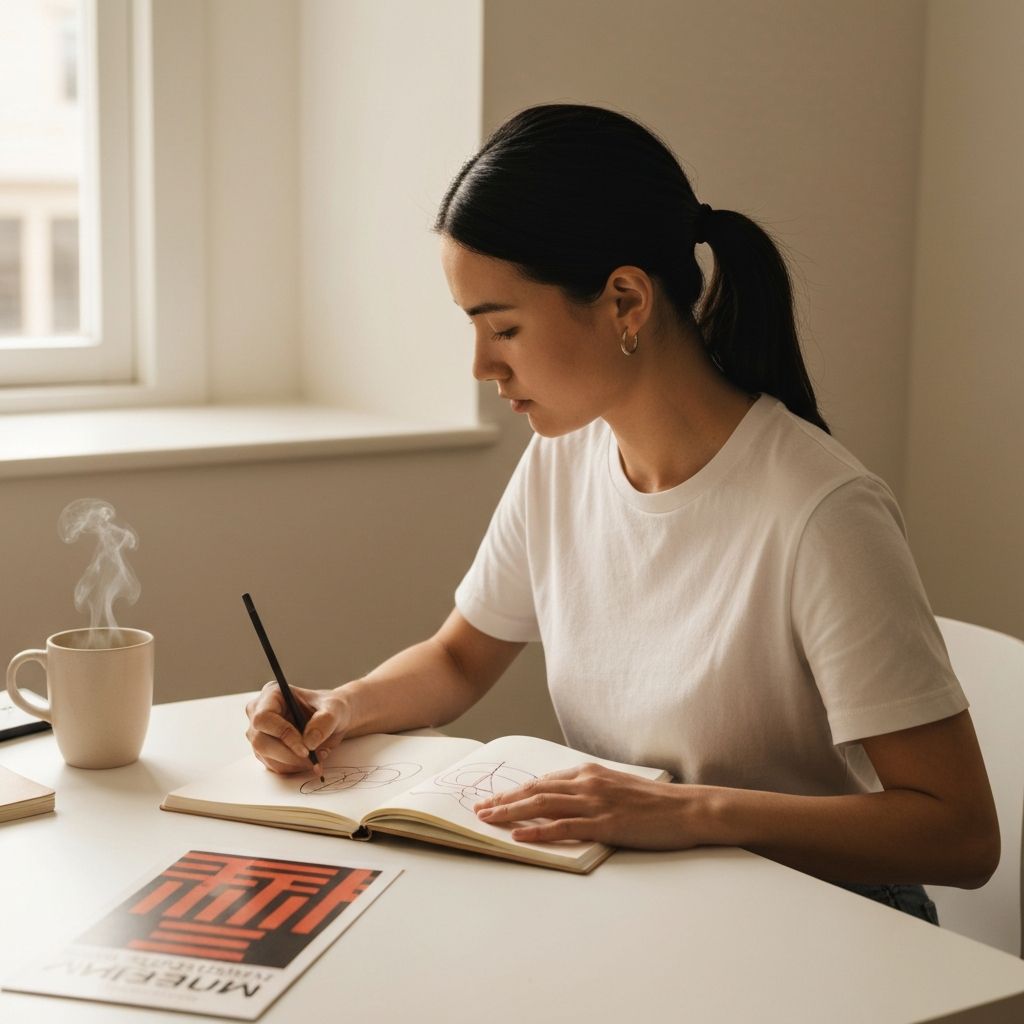
When Looking at Art Is Not Enough
At some point, just observing art stops being enough.
You go to a museum. You feel something - maybe subtle, maybe overwhelming. You take a photo, walk away... and the feeling fades.
There's often a quiet urge that follows:
“I want to do something with this.”
Not in a grand, artistic way. Just... something small. Personal. Yours.
Back to the Classroom (Where It Actually Made Sense)
In high school, art classes had a rhythm I only appreciate now:
- 1.Learn about artists and movements
- 2.Visit museums or study artworks
- 3.Then... create something yourself
At the time, the last part felt like homework. Now it feels like the most important step.
Because that's where something shifts. You stop being just an observer of art. You become part of the conversation.
Why Making (Even Badly) Matters
Let's remove some pressure first:
This is not about being good at art.
In fact, the more “amateur” it is, the more honest it tends to be.
- *A messy sketch
- *A few chaotic lines
- *A color you chose without thinking too much
These are not mistakes. They're signals.
When you create - even in the simplest way - you give form to something internal that didn't have words.
And suddenly: Art is not just something you consume. It's something you use.
The Bridge Between Reflection and Expression
Art journaling sits exactly in between:
Reflection → What did I feel when I saw this?
Expression → What happens if I respond to it?
You don't have to choose one. You can:
- *Write a sentence
- *Add a quick doodle
- *Circle something in the image
- *Highlight a detail that stayed with you
It becomes a dialogue: The artwork speaks → You respond.
Not intellectually. Just intuitively.
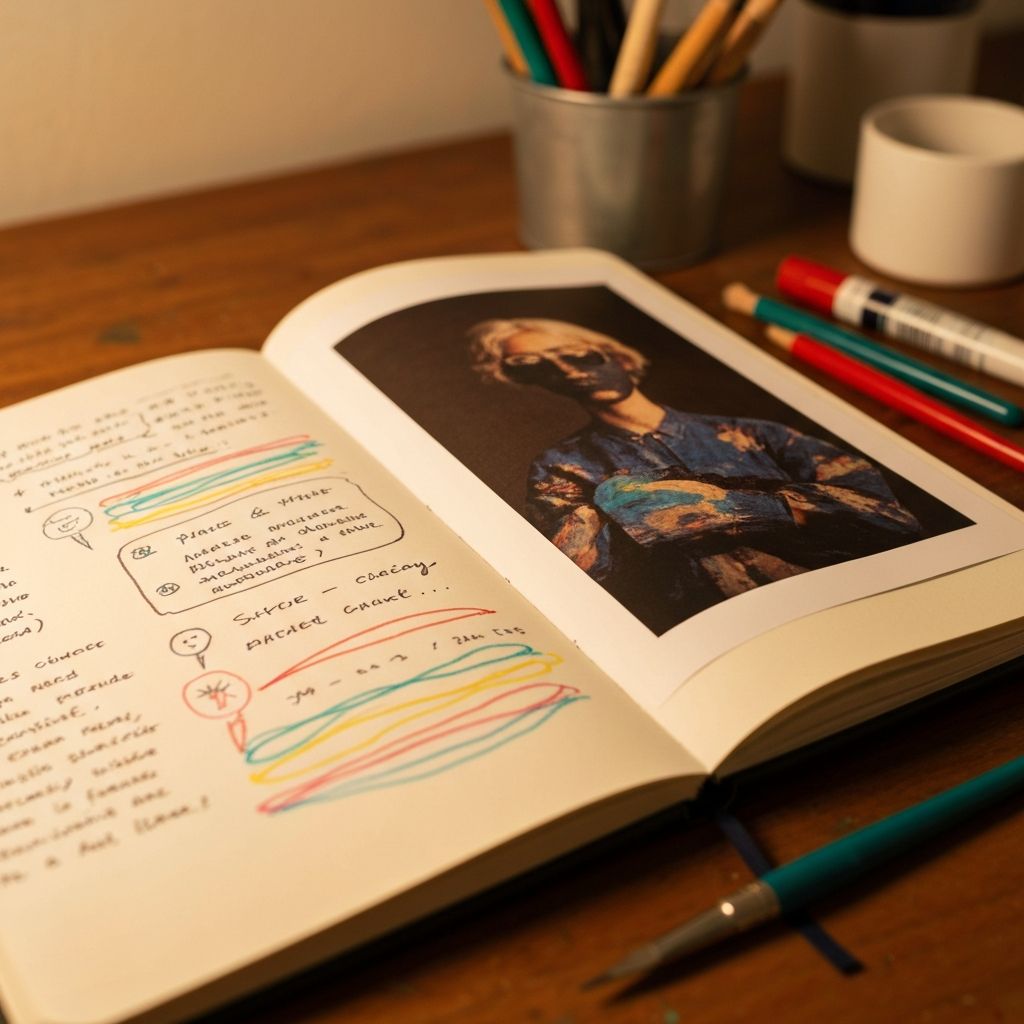
A Simple Practice (That Actually Works)
If you want to try this without overthinking:
1. Capture the moment
Take a photo of the artwork, or save something that moved you
2. Write one honest sentence
Not “smart” - just real. Like: “This makes me feel safe” or “I don't like it but I can't stop looking”
3. Add something visual
A quick doodle, a line, a shape, a color
4. Stop there
No perfection. No polishing.
That's it. That's a complete entry.
Why This Feels So Good (Even If You Don't Know Why)
There's a quiet reason this practice feels grounding:
It brings you back to yourself.
Not your role. Not your responsibilities. Not your productivity.
Just your inner world - reacting, feeling, noticing.
We don't often give ourselves space for that. And art, in its own subtle way, invites it.
You Don't Need to Be an Artist
You don't need technique. You don't need talent. You don't need to understand art history deeply.
You just need to notice:
- *What stayed with you
- *What confused you
- *What you liked (or didn't)
And allow yourself to respond. Even quietly. Even imperfectly.
From Art to Self (Without Forcing It)
Somewhere along the way, this stops being about art.
And becomes about:
- *Recognizing your patterns
- *Understanding your emotions
- *Seeing what draws you in again and again
You don't have to analyze it deeply. Just collecting these moments is already enough.
Start Small, Stay Close
Next time something moves you - even slightly: Capture it. Write a sentence. Add a line.
That's already a complete entry. And over time, without forcing anything, you'll build something surprisingly meaningful: A record of how you experience the world.
Continue Reading
What Is Art? Why It Can't Be Defined (And Why That Matters)
A reflection on meaning, emotion, and the practice of art journaling.
Art Journaling for Beginners: Capture the Moment and Move On
A simple 5-step process to start your art journal today.
Art Journaling Ideas: Find Inspiration When Creativity Feels Stuck
Practical ideas to spark your creativity and keep your journal alive.
A Digital Art Journal Experience at STRAAT Museum
How street art sparked a family journaling adventure.