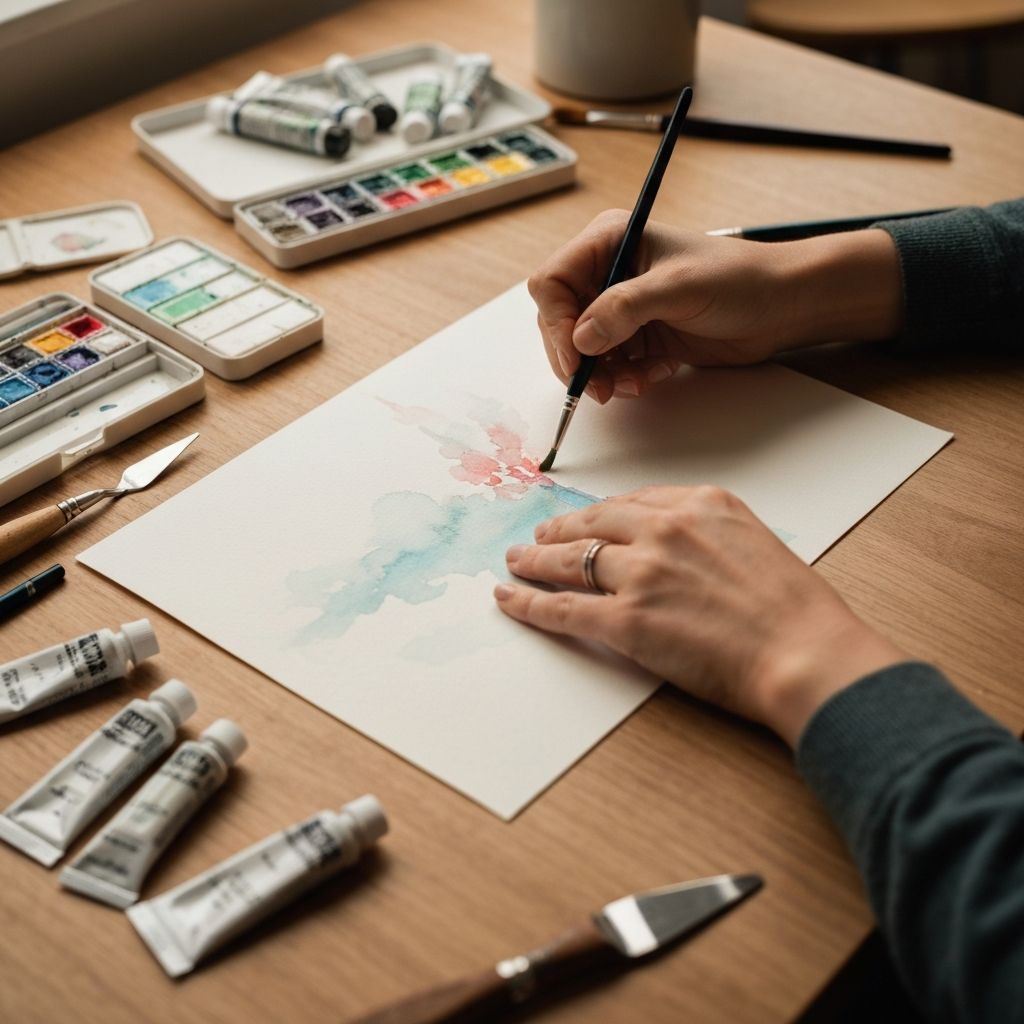
Sometimes the most powerful reflection happens when we create it.
Drawing, doodling, painting, or making simple marks on paper can express emotions that are difficult to put into words.
Many artists describe the creative process as a way of understanding themselves. But you do not need to be an artist to use creativity for reflection.
Even simple marks or colors can reveal thoughts and feelings.
Why Creating Art Helps Reflection
When we create something visually, the brain works differently than when we think in words.
Art allows us to:
- Express emotions without needing perfect language
- Explore thoughts through shapes and colors
- Slow down and observe our internal state
This is why art therapy and creative journaling are widely used in psychology and education.
A Simple Creative Reflection Practice
You can try this simple method:
1Start with a Feeling
Ask yourself:
What emotion am I carrying today?
2Represent It Visually
Use colors, shapes, or lines that match the feeling. There is no right or wrong way.
3Add One Short Reflection
After creating, write a sentence about what the artwork represents.
Example: "These overlapping lines feel like the busy energy in my mind today."
The artwork becomes a visual reflection of your inner state.
Creative Reflection Builds Awareness
Over time you may notice:
- Certain colors appearing when you feel calm
- Certain shapes appearing when you feel overwhelmed
- Patterns in how you express emotions visually
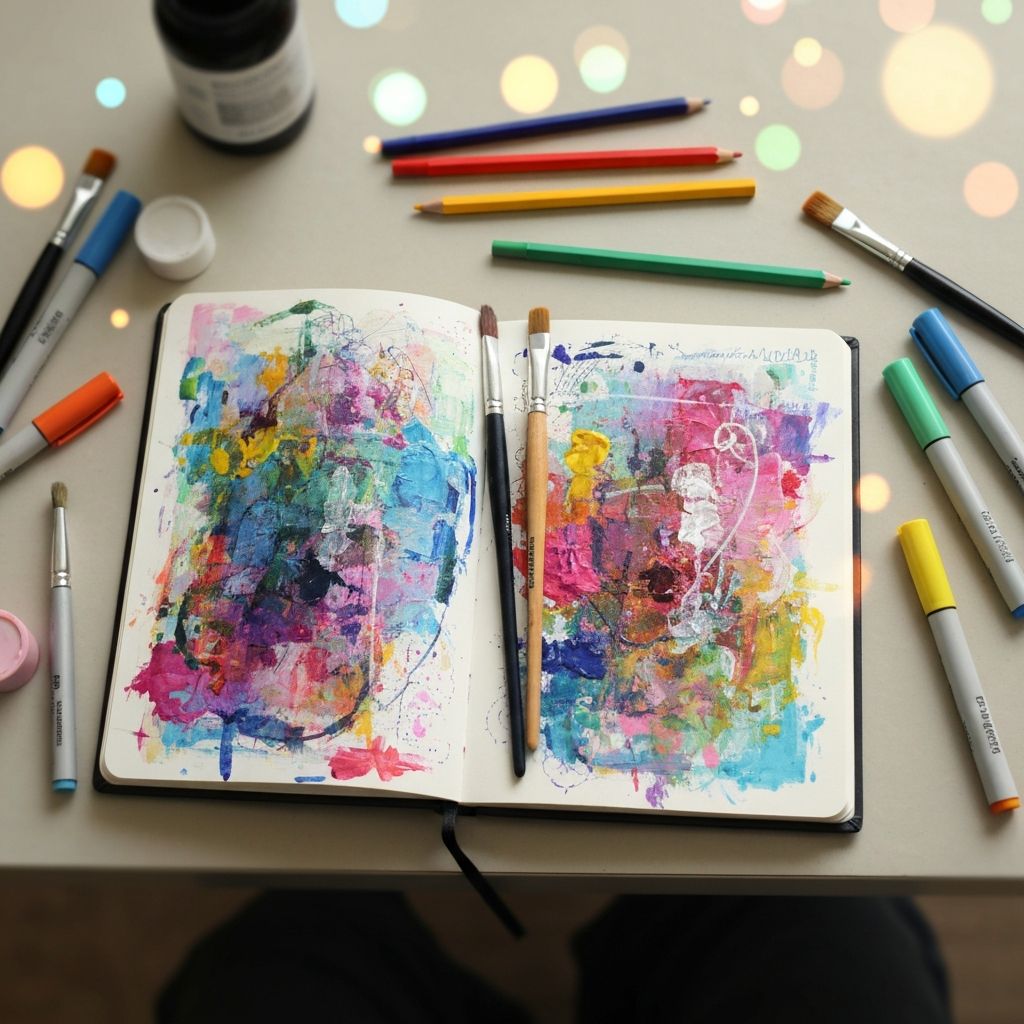
Your creative journal becomes a visual record of your inner life.
And sometimes it reveals things words cannot.
Document Your Creative Reflections
Photograph your artwork, add a brief reflection, and build a visual timeline of your creative practice.
Art Journal helps you capture both the image and the meaning behind it.