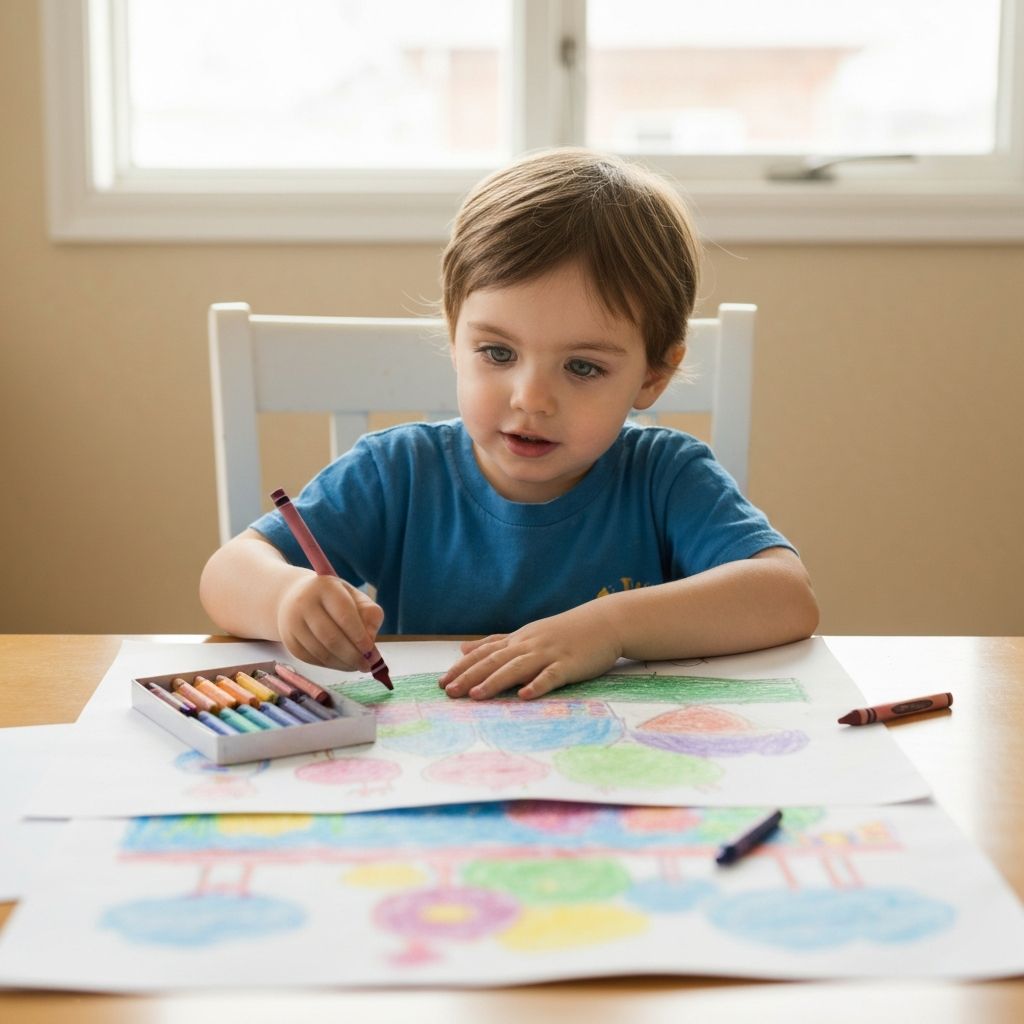
Long before they can explain complex emotions, they draw them.
A child might draw:
- Their family
- Their favorite place
- A memory from the day
- Something that made them happy or scared
These drawings are not just pictures. They are reflections.
Why Art Is a Natural Language for Children
Children often experience emotions more strongly than adults, but they do not yet have the vocabulary to explain them. As they grow, their drawings evolve through predictable stages from scribbles to symbols.
Art becomes their language.
Through drawing and painting, children can:
- Process daily experiences
- Express feelings they cannot describe
- Explore imagination and storytelling
A simple drawing can contain a surprising amount of emotional meaning.
Encouraging Art Reflection in Kids
Parents and teachers can support this process in simple ways.
Instead of asking:
"What is it supposed to be?"
Try asking:
- "What was happening when you drew this?"
- "How did you feel when making it?"
- "What part of the drawing do you like the most?"
These questions invite reflection rather than judgment.
Capturing Children's Art Moments
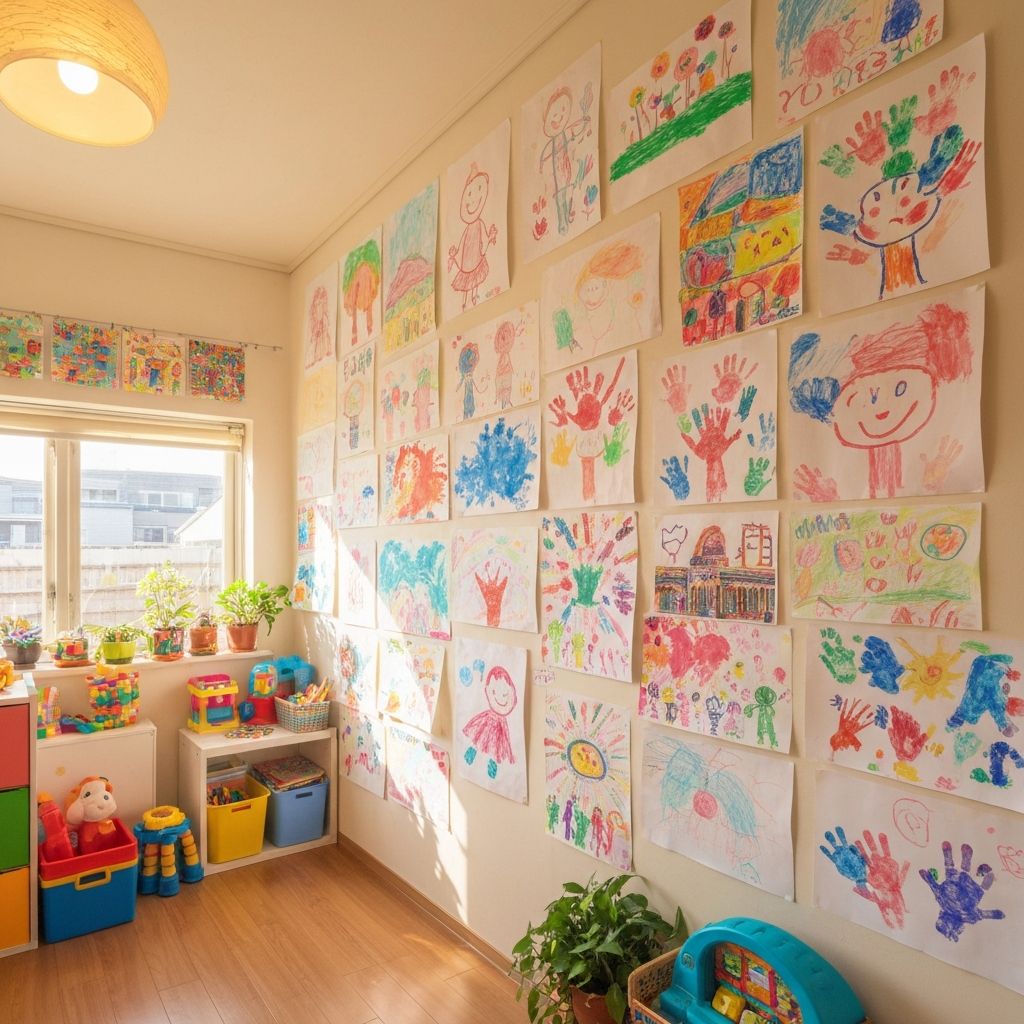
Children create hundreds of drawings as they grow. Many of them disappear over time.
But some drawings capture powerful moments:
- A memory
- A family story
- A feeling
Saving those drawings with a short reflection can create a beautiful visual timeline of childhood.
Sometimes the most meaningful art journals are the ones created together with children.
Preserve Their Art, Keep Their Stories
Photograph your child's artwork and write down what they said about it. Years from now, their words will be as precious as the drawing itself.
Art Journal helps families create a shared archive of creative moments that would otherwise be lost.