What Kids' Drawings Mean: Understanding Symbols from Ages 1 to 10
Children draw long before they can fully explain what they feel.
A few lines on paper. A circle with eyes. A house floating in space. A family made of hearts.
To adults, these drawings can seem simple or random. But for children, they are often a form of reflection — a way to process the world, relationships, and emotions.
This guide will help you understand typical symbols and meanings in children's drawings from ages 1 to 10, not as strict rules, but as gentle clues into their inner world.
Why Children Express Through Drawing
Before language becomes precise, drawing becomes a child's language.
Through art, children can:
- Express emotions they cannot name
- Replay experiences from their day
- Explore relationships and identity
- Create a sense of control over their world
A drawing is rarely just a drawing. It is often a moment captured in visual form. This is why art journaling can be so powerful for children.
Ages 1–2: Scribbles and Movement
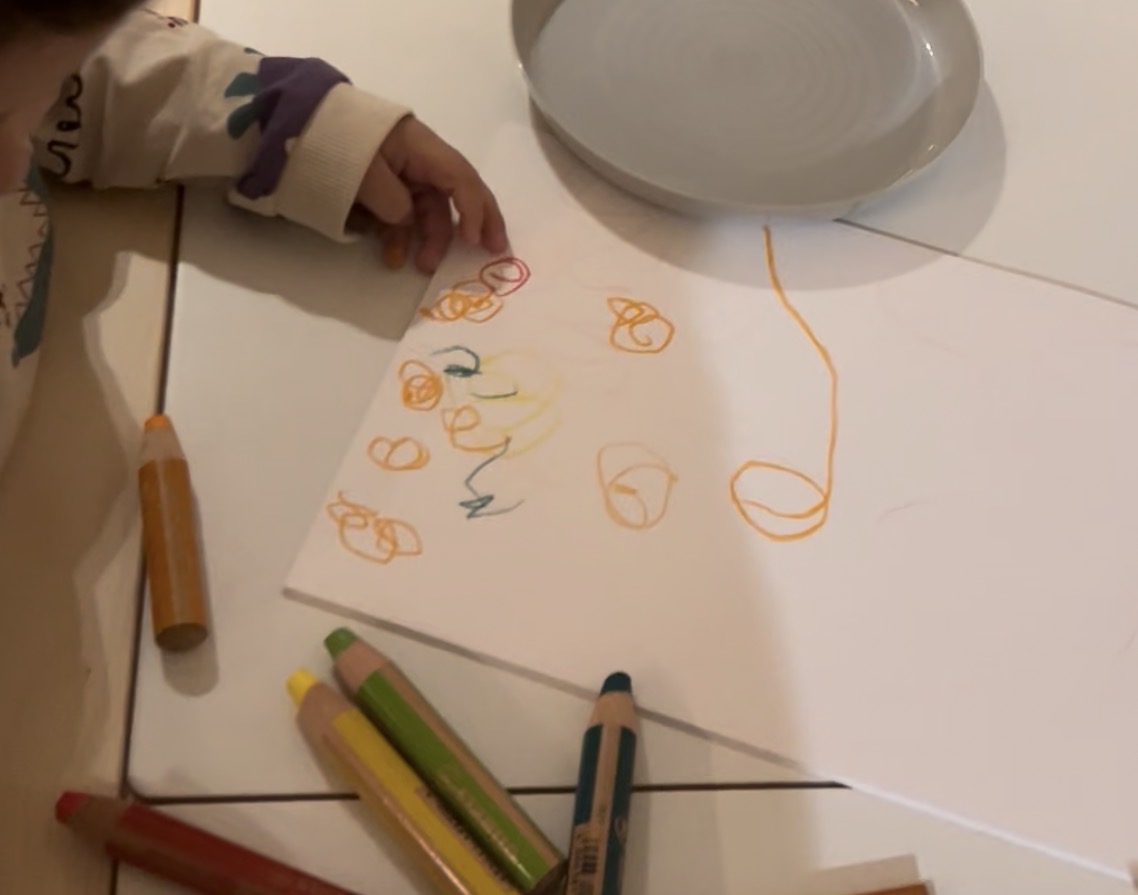
At this stage, drawings are all about movement and discovery.
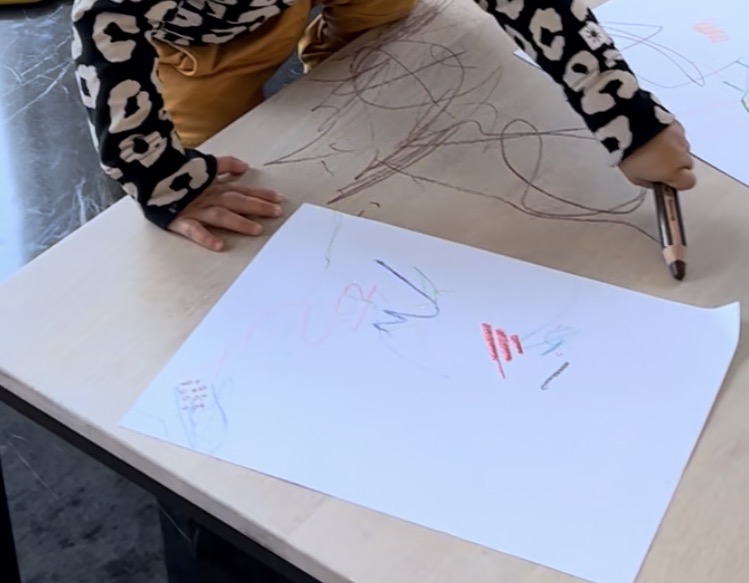
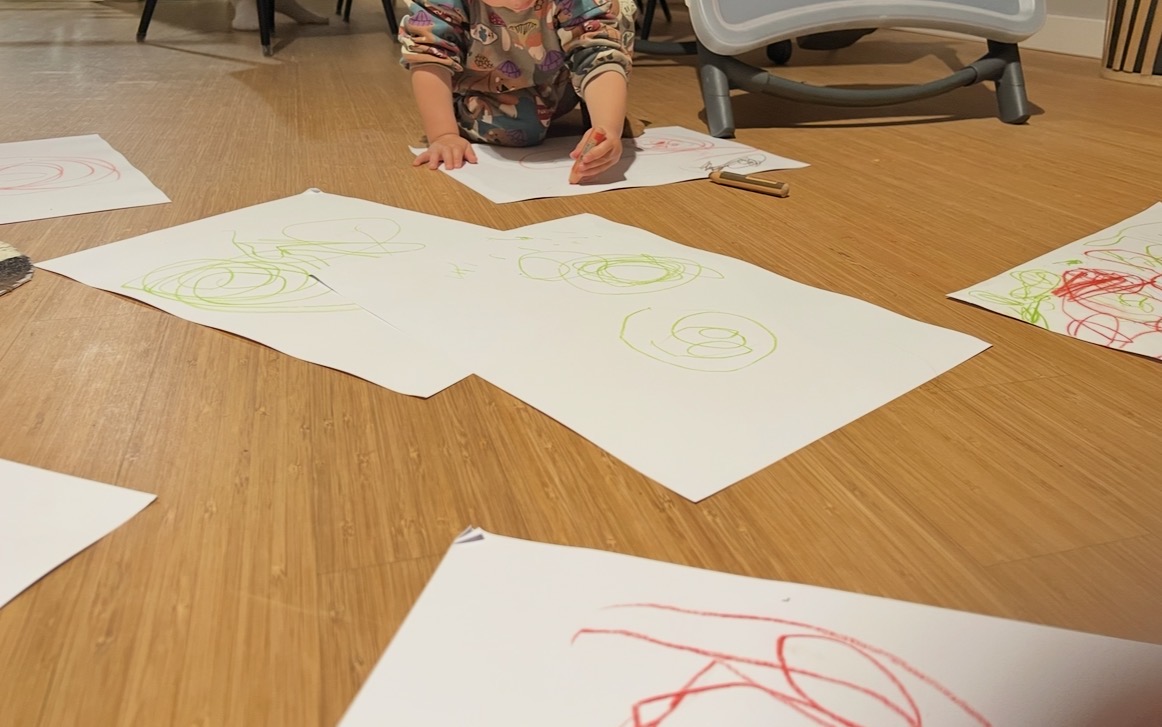
Typical elements
- Random lines and scribbles
- Repeated circular motions
- Strong, energetic strokes
What it can mean
Children are exploring:
- Cause and effect (movement creates marks)
- Physical control
- Sensory experience
The drawing is not about representation yet. It is about feeling and action.
What to notice
- Pressure (soft vs strong lines)
- Rhythm (calm vs chaotic movement)
Reflection prompt for parents:
What emotion does this movement remind me of?
Ages 2–3: First Shapes and Symbols
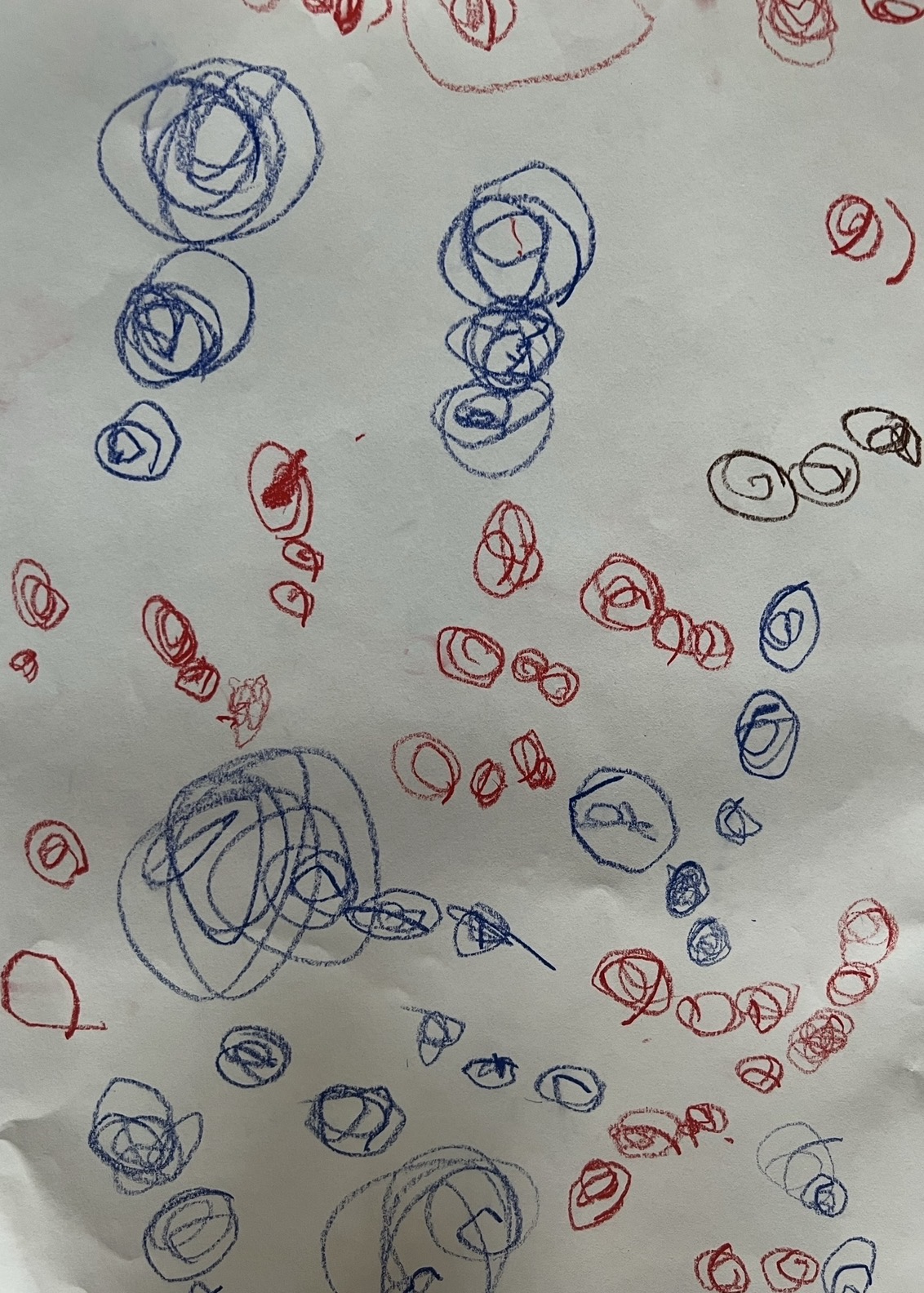
Children begin to assign meaning to their drawings.
A circle might suddenly be: "Mommy." "The sun." "A face."
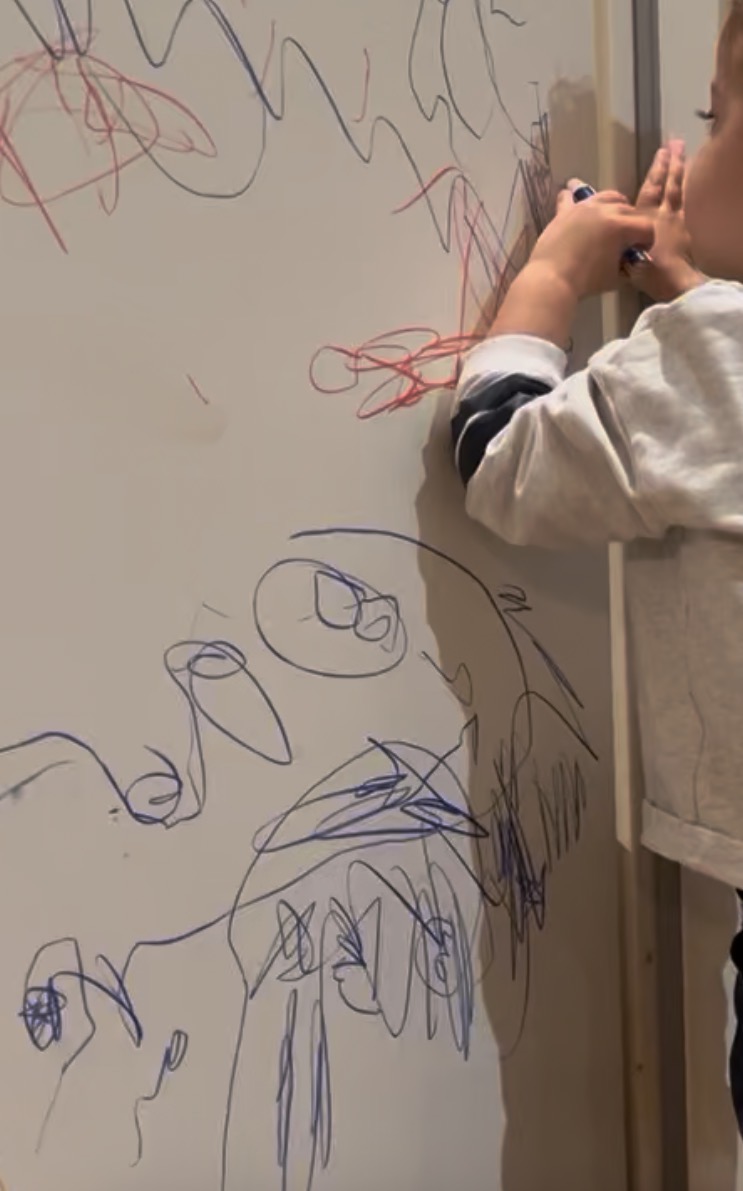
Typical symbols
- Circles
- Dots (eyes)
- Simple lines (legs, arms)
What it can mean
This stage marks the beginning of:
- Symbolic thinking
- Early identity awareness
- Recognition of important people
Important insight:
The meaning often comes after the drawing. A child may decide what it is once it's finished.
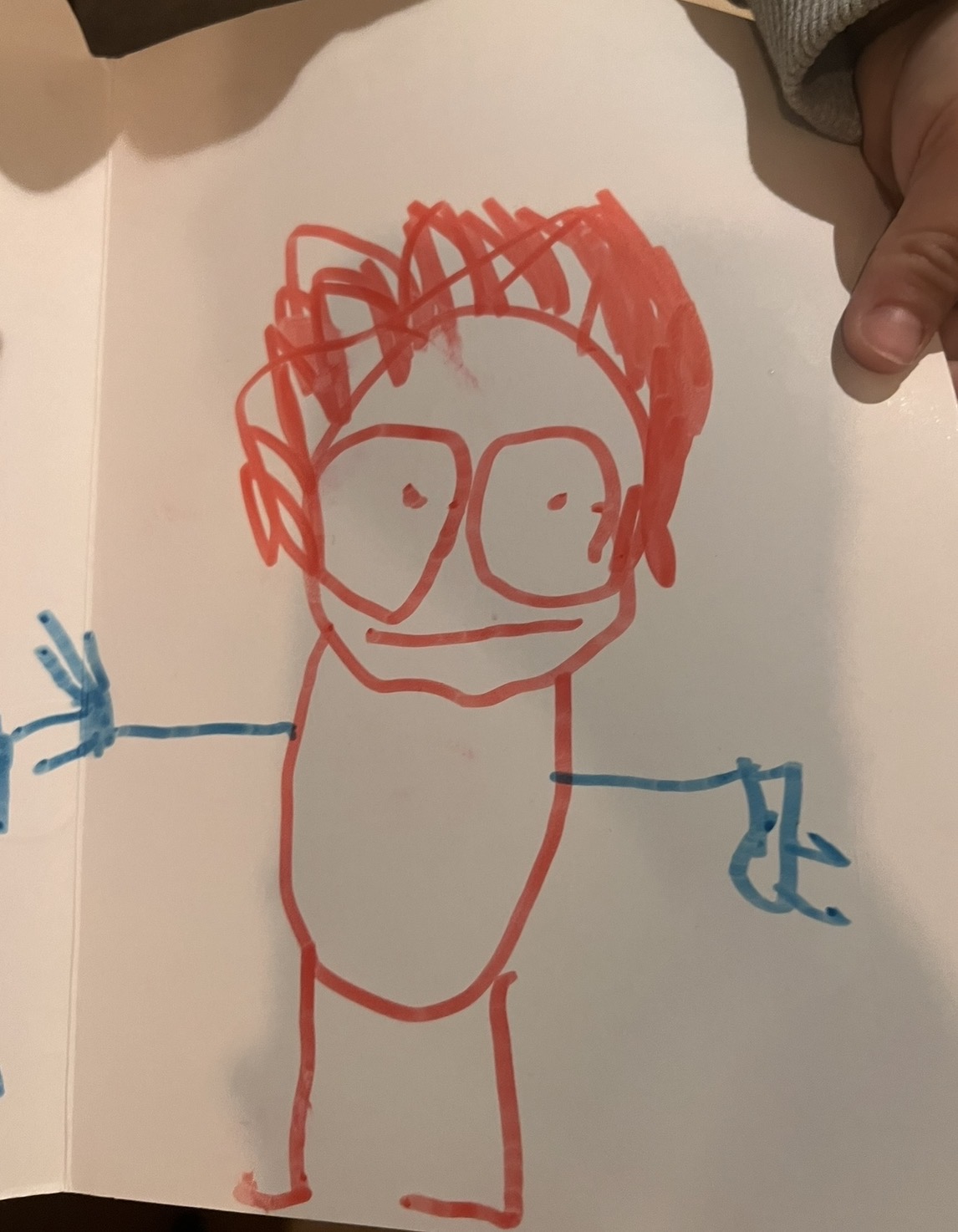
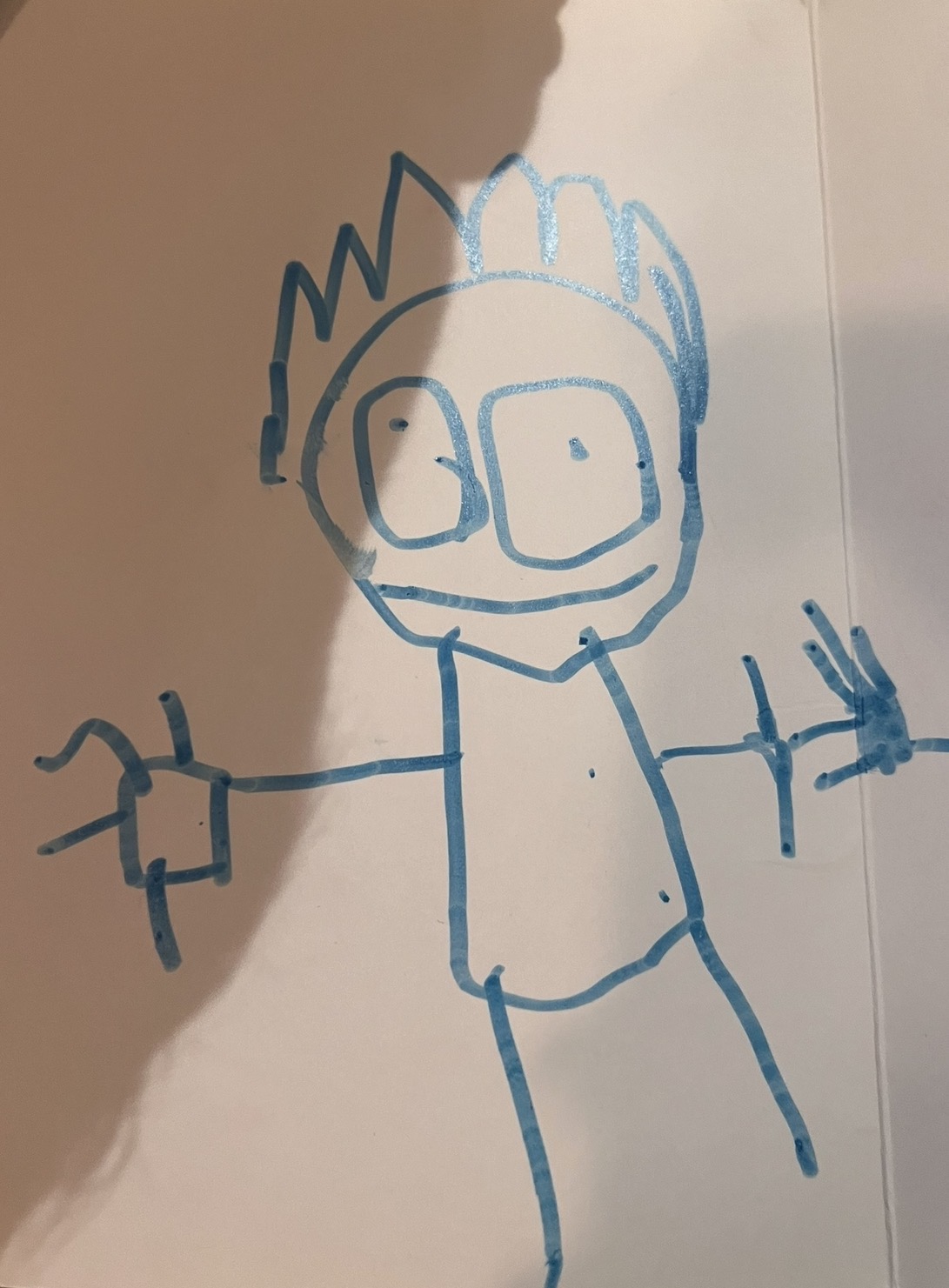
Ages 3–4: The "Tadpole People"
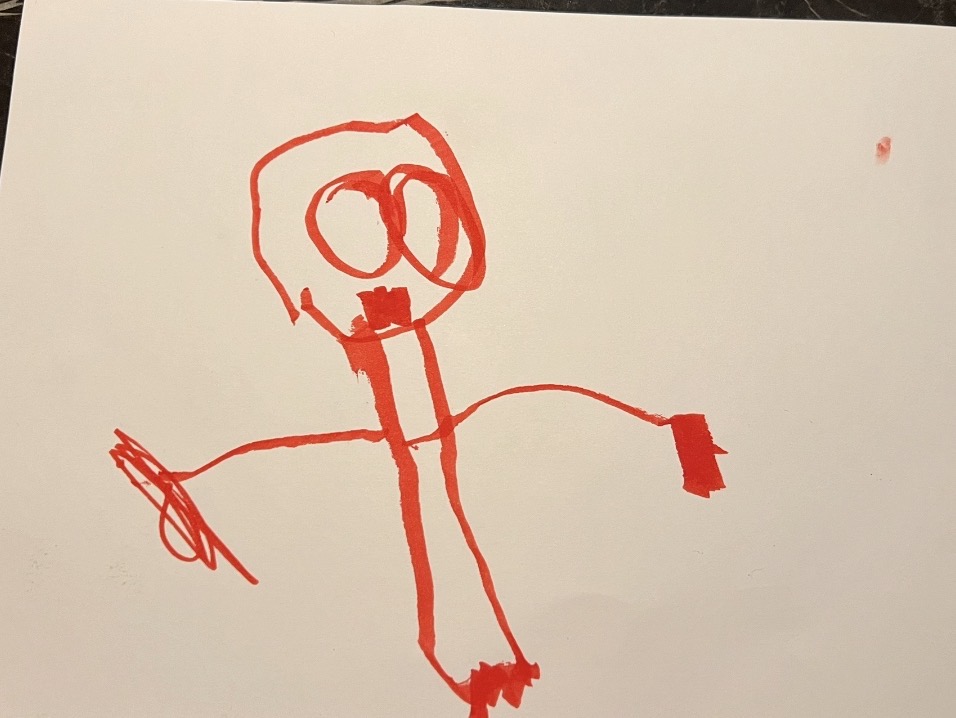
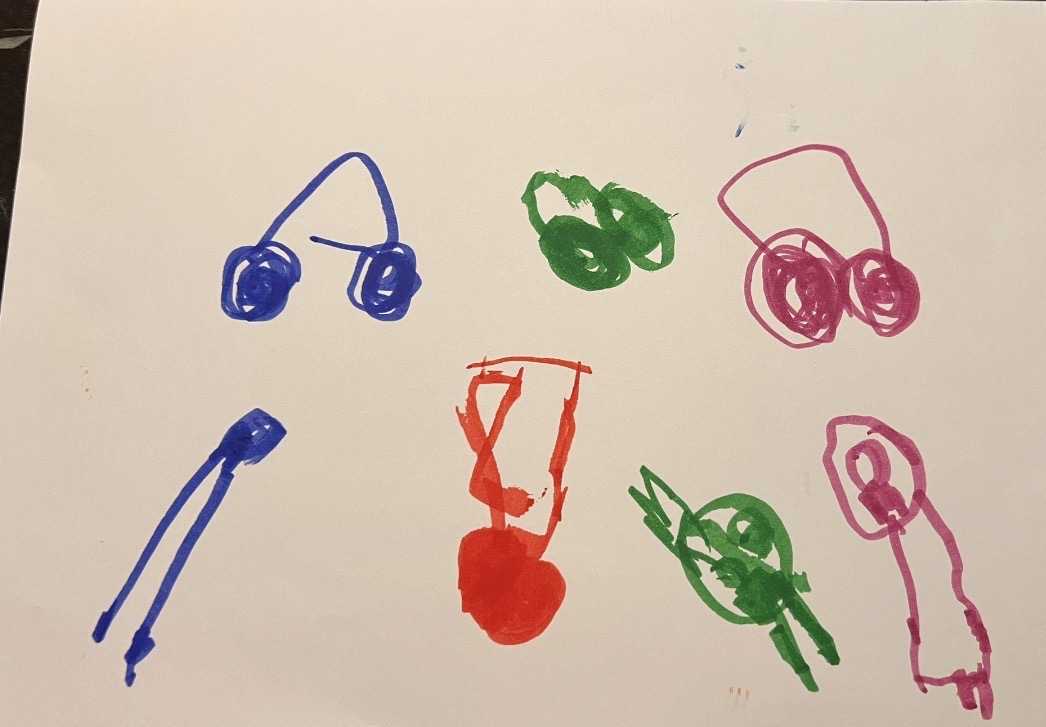
This is one of the most recognizable stages in child art development.
Typical symbols
- "Tadpole" figures (big head + legs, no body)
- Smiling faces
- Suns in the corner
- Floating objects
What it can mean
Children are focusing on:
- People and relationships
- Emotional expression (smiles, faces)
- Important figures in their life
What to notice
- Who is included in the drawing
- Size of figures (larger = often more important)
- Proximity between people
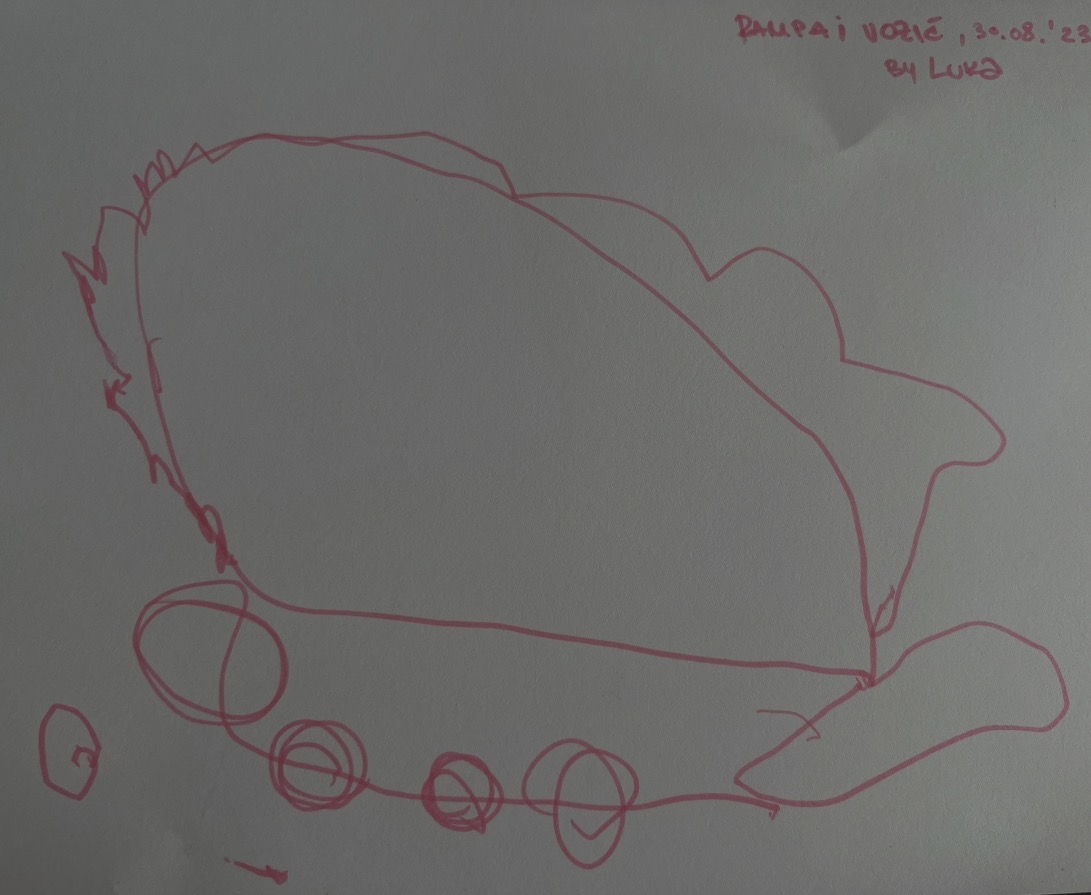
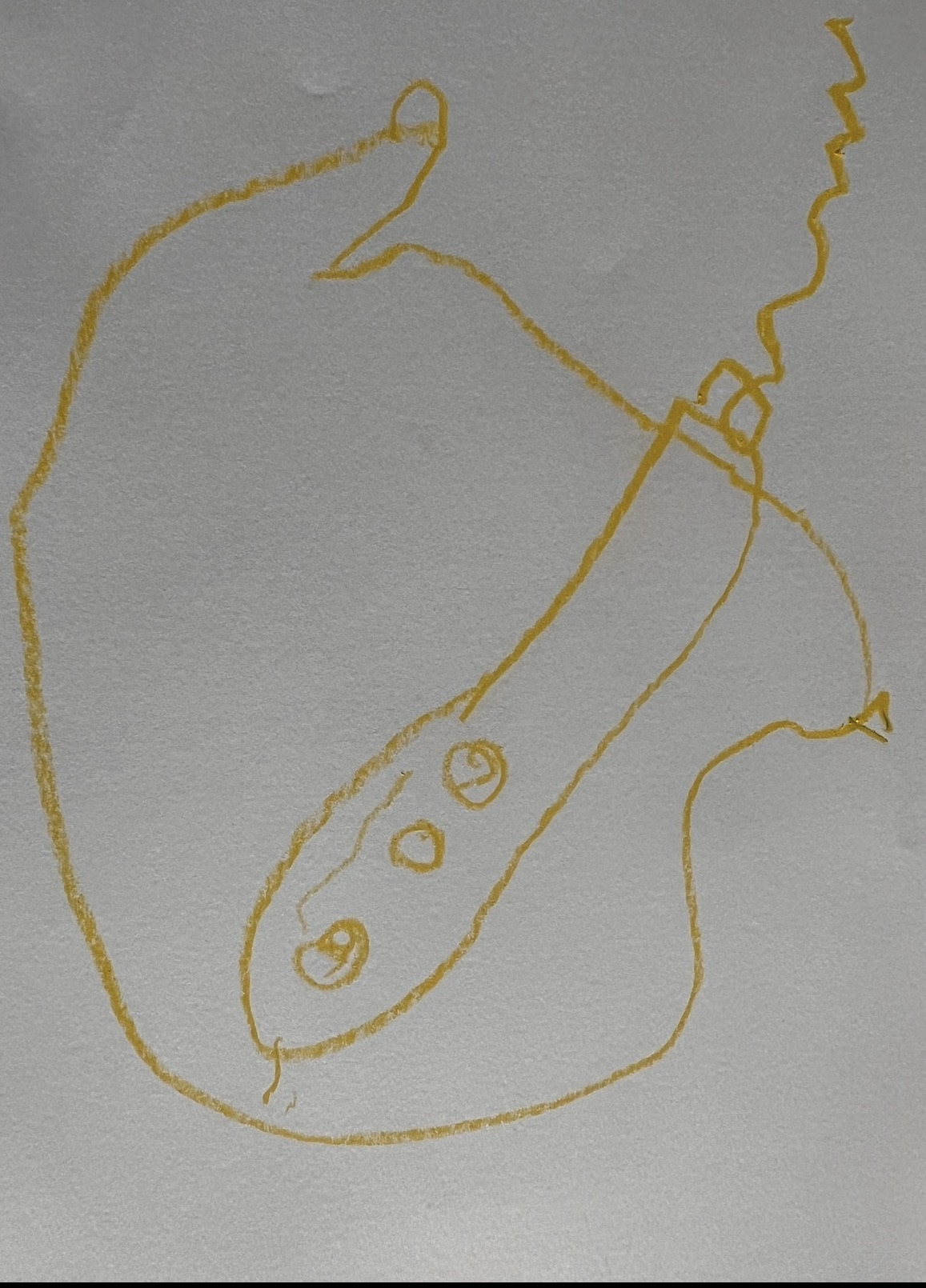
Ages 4–5: Stories Begin to Appear
Drawings become more narrative at this stage.
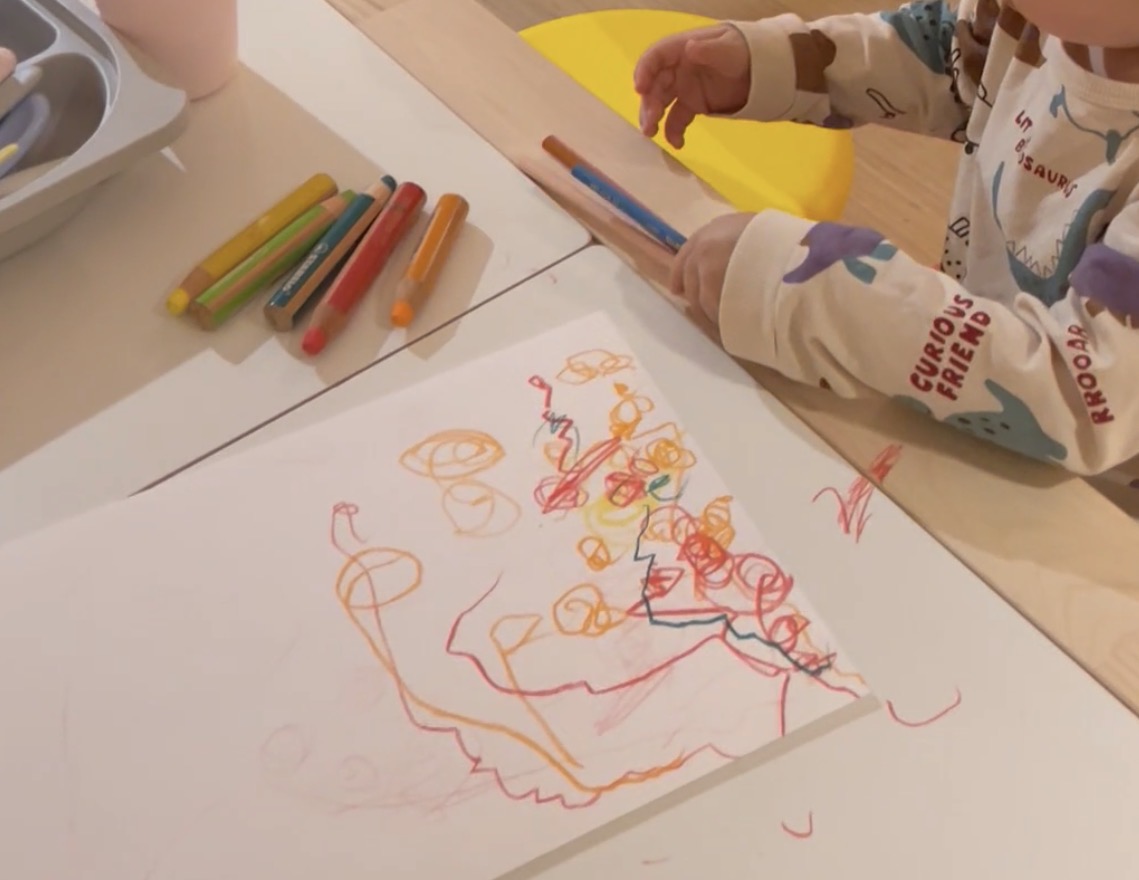
Typical symbols
- Houses
- Families
- Trees and nature
- Basic scenes (park, home, school)
What it can mean
Children start to:
- Recreate experiences
- Tell stories visually
- Process daily life
Common patterns:
- Houses often represent security
- Family drawings reflect relationships
- Repeated themes show what is important or on their mind
Ages 5–7: Emotional and Social Awareness
At this stage, drawings become more detailed and emotionally expressive.
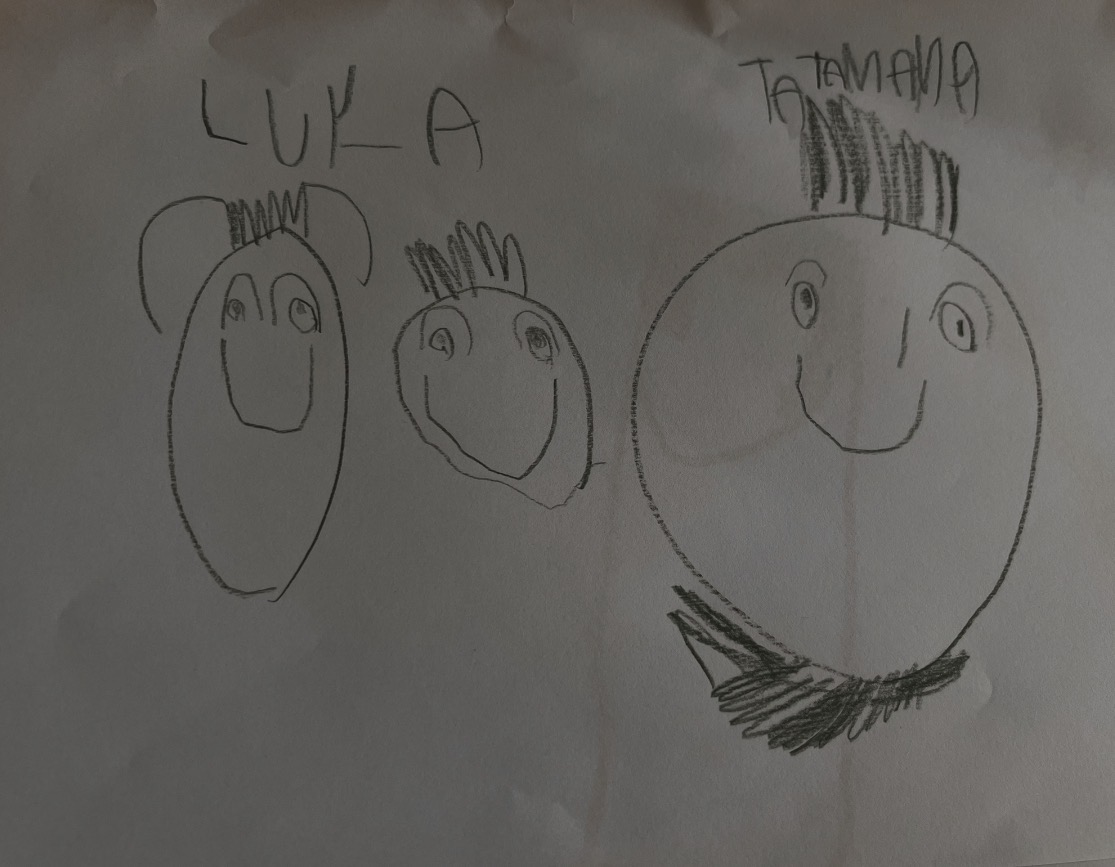
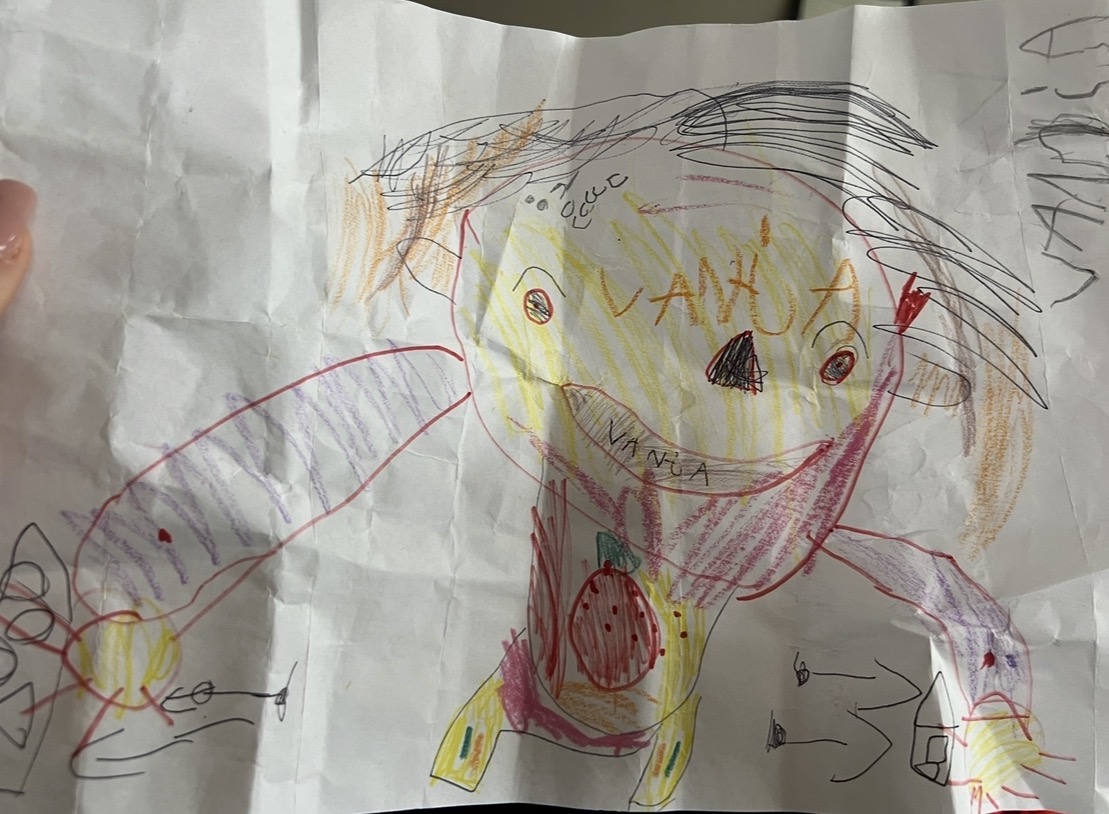
Typical symbols and meanings
- Hearts — love, safety, strong emotional bonds
- Sun — happiness, warmth, positive environment
- Rain or clouds — sadness, uncertainty, or storytelling elements
- Large figures — importance, admiration, or emotional closeness
- Small figures — shyness, distance, or simply perspective
What to notice
- Emotional tone of the drawing
- Repetition of symbols (e.g., many hearts)
- Interactions between figures
Ages 7–10: Identity and Inner World
Children begin to develop their own style and perspective.
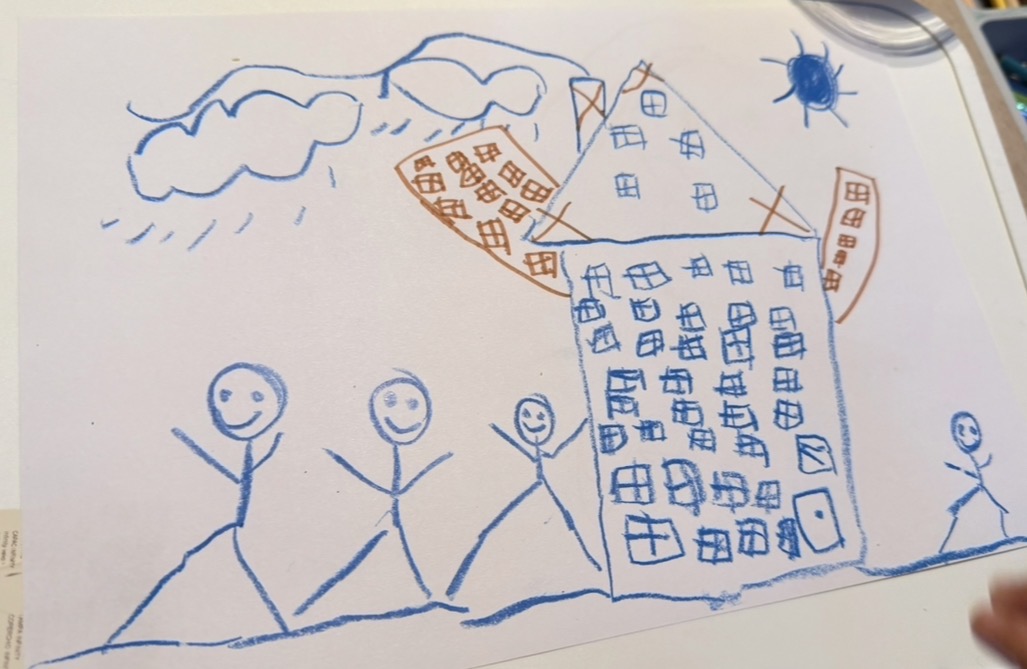
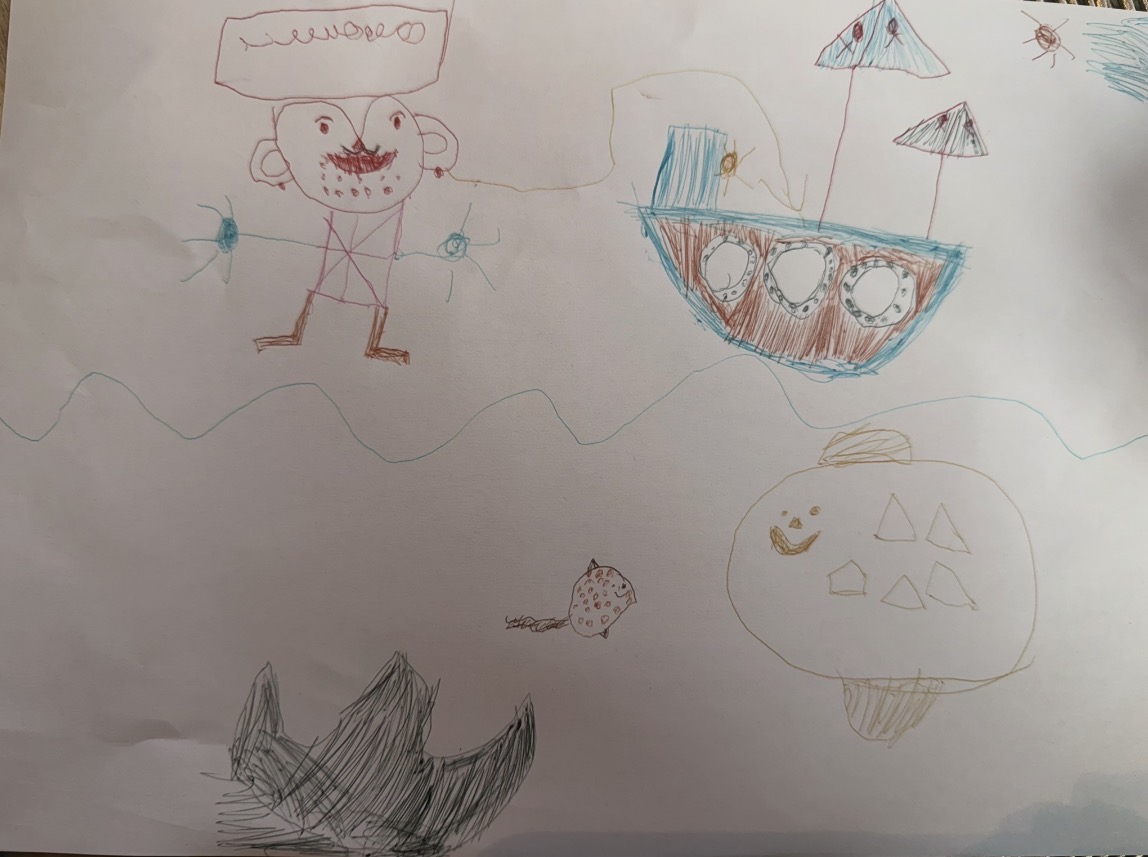
Typical elements
- More realistic proportions
- Perspective (foreground/background)
- Detailed environments
- Imaginative or fantasy elements
What it can mean
At this stage, drawings reflect:
- Identity development
- Social awareness
- Inner thoughts and imagination
Symbols become more personal:
A symbol may no longer have a universal meaning. Instead, it becomes unique to the child.
Important Note: There Is No Fixed Meaning
It is important not to over-interpret children's drawings.
A dark color does not automatically mean sadness. A small figure does not automatically mean insecurity.
Context matters.
The most accurate way to understand a drawing is simple: Ask the child.
How to Talk to Kids About Their Drawings
Instead of interpreting, invite reflection. Try questions like:
- What was happening in this drawing?
- How did you feel while making it?
- Which part do you like the most?
For more prompts, explore our Prompts Library with questions designed for creative reflection.
This helps children:
- Develop emotional awareness
- Feel seen and heard
- Build confidence in expression
Turning Kids' Drawings Into a Reflection Journal
Children create hundreds of drawings as they grow. Some of them capture something special:
A feeling. A moment. A relationship.
You can turn these into a simple art journal:
- Take a photo of the drawing
- Write one sentence about the moment
- Save it over time
Example:
"Luka drew our family with hearts today. He said it's because we are 'always together.'"
These small entries become a powerful memory archive. Learn more in our guide on how to save kids' artwork.
Capture the Moment
Children naturally reflect through art. They show us how to feel first, and explain later.
Take a photo. Write a sentence. Keep the moment.
That is how everyday drawings become lasting memories — and the idea behind artjournal.ing.
Organize and Rediscover Kids' Art with Tags
When you save your child's drawings to Art Journal, you can add tags like "kids art", "age 4", or "family portrait". Later, filter by any tag to instantly find related pieces across your entire collection.
This makes it easy to:
- Track development stages over time
- Find all drawings of a particular theme (like "tadpole people" or "houses")
- Share a curated selection with family
- Revisit a specific period in your child's creative journey
See how it works: explore what other parents have shared in the kids' art collection.