Your cultural life, beautifully remembered.
“It's like Letterboxd, but for art.” — our community
Artwork
Dirk Bag
1 moment on Art Journal
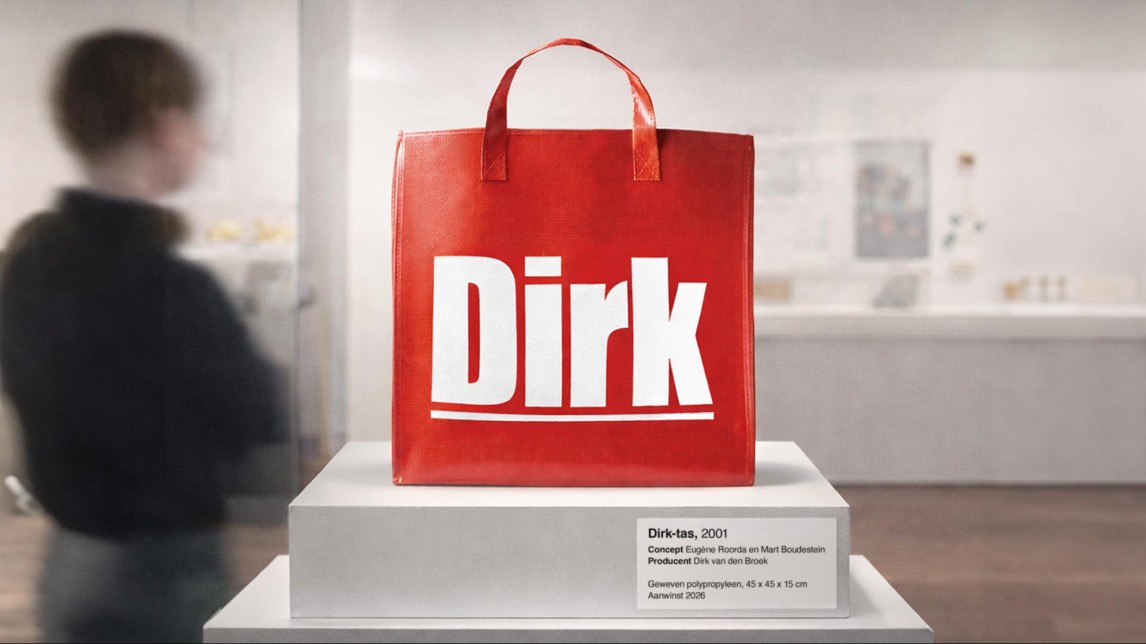
The Dirk shopping bag, commonly used across the Netherlands, entered the collection of the Stedelijk Museum as a contemporary cultural artifact. While originally designed as a purely functional, mass-produced object for a Dutch supermarket chain founded by Dirk van den Broek, its museum inclusion reframes it within the lineage of conceptual art. This gesture directly echoes the tradition of the readymade, introduced by Marcel Duchamp in the early 20th century, where everyday objects are presented as art through context and selection rather than craftsmanship. However, unlike Duchamp’s singular objects, the Dirk bag represents something slightly different: mass production instead of uniqueness, branding instead of anonymity, collective familiarity instead of shock value. Its inclusion reflects how contemporary museums increasingly collect objects that represent visual culture, consumer behavior, and national identity, rather than just traditional fine art. There’s also a subtle Dutch layer here. The Netherlands has a strong design culture that values clarity, functionality, and everyday aesthetics. The Dirk bag unintentionally embodies all three - bold typography, direct communication, and pure utility. By placing it on a pedestal, the museum doesn’t claim the bag is beautiful. It asks whether recognition itself is enough to create meaning.
How to reflect if you encounter this artwork?
- Notice how the familiar Dirk shopping bag's design and logo transform when placed in a museum setting, prompting you to reconsider its role beyond mere utility.
- Consider how the bag's mass-produced, commercial origins contrast with its presentation as conceptual art, and reflect on what this shift means for your understanding of art and consumer culture.
- Observe the simplicity and materials of the plastic bag, and think about how everyday objects can carry cultural and artistic significance through context alone.
Reflections
Add your momentLoading reflections...