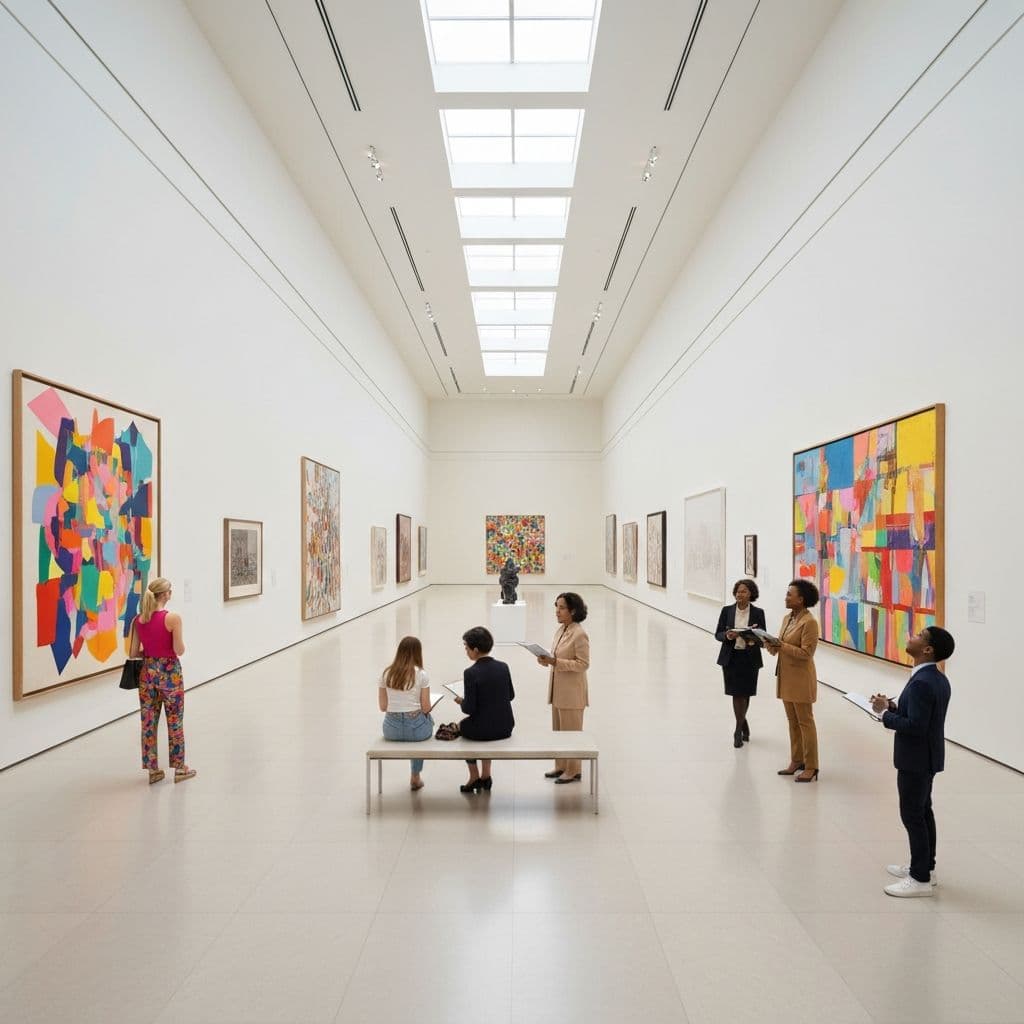
How to Declutter While Keeping Your Art Memories (A Simple Guide)
If you've ever tried to declutter your home and got stuck on a pile of children's drawings or old gallery notes, you're not alone.
In The Life-Changing Magic of Tidying Up, Marie Kondo famously asks: “Does it spark joy?” But what happens when everything sparks joy, and you still need to let go?
Some things are hard to throw away. Not because you need them, but because they meant something.
- A museum visit with your child
- A drawing they made when they were obsessed with hearts
- A painting that stayed with you longer than expected
The challenge is this: How do you keep those memories without keeping everything?
This is where art journaling becomes more than a creative hobby. It becomes a practical way to preserve what matters.
Why Art Memories Are the Hardest to Organize
Art is emotional by nature.
Marie Kondo calls these “sentimental items” and recommends tackling them last, because they're the hardest. Unlike receipts or documents, you're not keeping them for utility. You're keeping them for the feeling, the connection, the moment in time.
That's why clutter builds up quickly:
- Stacks of kids' artwork you can't throw away
- Random photos from galleries you never revisit
- Notes you meant to write but never did
Instead of helping you remember, it creates overwhelm.
Art Journaling as a Minimalist Memory System
Art journaling is often seen as something elaborate: beautiful pages, curated spreads, perfect sketches.
But at its core, it's much simpler:
Art journaling is just capturing a moment with art + a small reflection.
It can be:
- One photo
- One drawing
- One sentence
That's enough.
And it solves a real problem: you can let go of the physical clutter while keeping the emotional memory.
1. What to Do with Kids' Drawings
If you search “art journaling ideas,” this is one of the most practical ones:
Turn children's art into a journal instead of a storage problem.
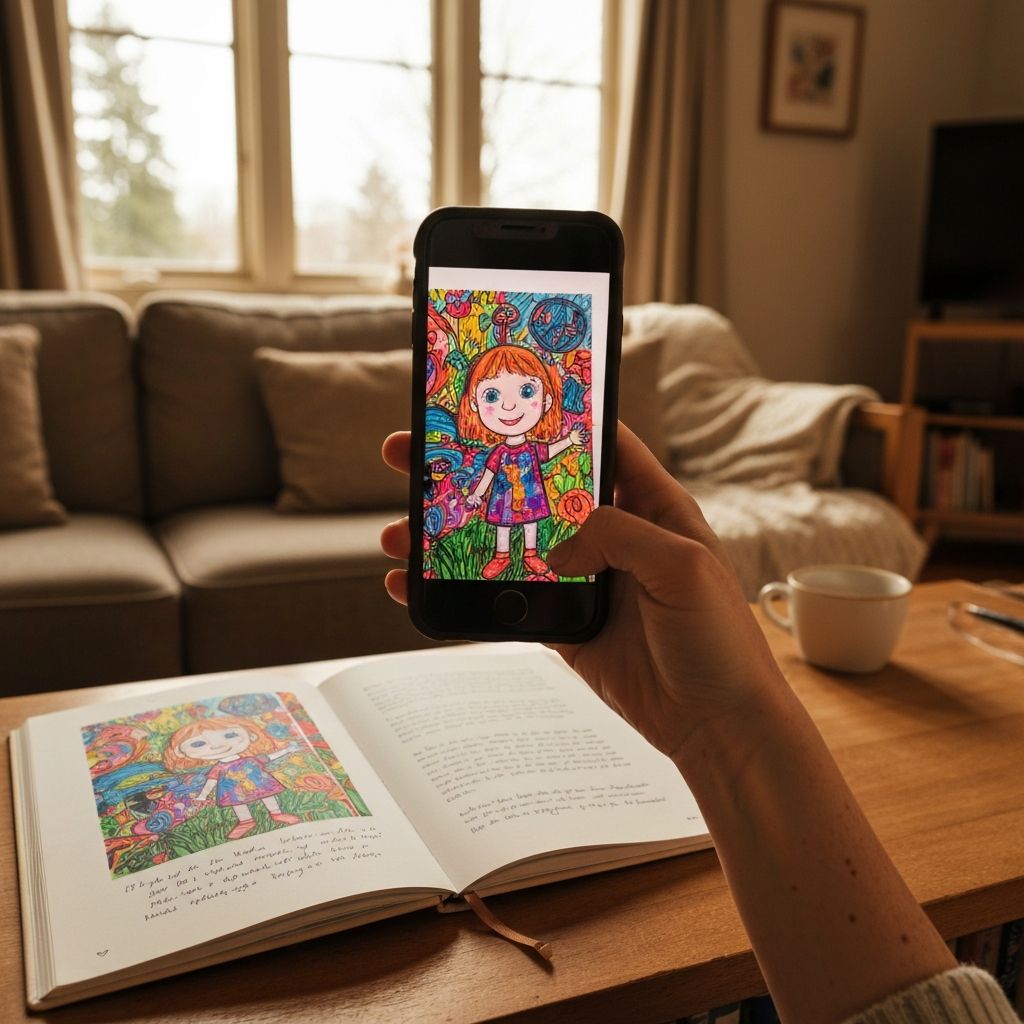
Simple process:
- 1. Take a photo of the drawing
- 2. Add a short note about the moment
- 3. Store it in your art journal (digital or physical)
Example entries:
- “He drew us as hearts again—this phase lasted weeks.”
- “First time she wrote her name next to the drawing.”
You don't need to keep every paper. You keep their evolution, their personality, your memory of that moment.
2. How to Journal Your Art Gallery Visits
Many people take photos in museums but never revisit them.
Art journaling turns those photos into something meaningful.
How to start art journaling from a gallery visit:
- 1. Take one or two photos (not everything)
- 2. Later, add a short reflection
- 3. Optionally sketch or annotate
Example prompts:
- What made me stop here?
- What confused or moved me?
- Would I come back to this piece?
This is visual journaling: a mix of image and thought. It doesn't need to be complete. It just needs to be honest.
3. Creative Journaling (Without Pressure)
One of the biggest blockers for beginners is thinking journaling needs time and effort.
It doesn't.
If you're exploring art journaling for beginners, start like this:
One image. One sentence. Done.
That's already a complete entry.
Over time, these small entries become:
- A record of your taste
- A map of what moves you
- A personal relationship with art
4. Organizing Your Art Journal (Without Over-Organizing)
You don't need a complex system.
Keep it simple:
- By time: the most natural approach
- By theme: e.g., “kids,” “museums,” “music”
Avoid over-categorizing. The goal is not perfect structure. It's easy revisiting.
5. What to Keep Physically (And What to Let Go)
Art journaling doesn't mean everything becomes digital.
Keep:
- A few favorite drawings
- One or two meaningful items from exhibitions
Let go of:
- Duplicates
- Things you don't revisit
- Items you feel guilty about keeping
As Marie Kondo writes, “The space in which we live should be for the person we are becoming now, not for the person we were in the past.”
If the memory is already captured in your journal, the object is optional.
Why This Works
When you combine photos, small reflections, and light structure, you create something better than storage.
You create a living memory system.
Not a box you avoid opening, but something you return to.
Start Today
If you're wondering how to start an art journal, try this:
- 1. Open your camera roll
- 2. Pick one art-related moment
- 3. Write one sentence about it
- 4. Save it as your first entry
No blank page pressure. No perfection.
You don't need to keep everything to remember what matters.
You just need a way to capture what you saw, what you felt, and why it stayed with you.
That's what art journaling offers. A lighter way to keep your memories, without carrying all the stuff.
Continue Reading
How to Start Art Journaling From a Moment (Not a Blank Page)
Skip the blank page anxiety. Begin with real moments.
Art Journaling for Beginners: Capture the Moment and Move On
A simple 5-step process to start your art journal today.
What Goodreads Can Teach Us About Art Journaling
How a book-tracking platform inspired a new way to remember art.
Documenting a Family Visit to STRAAT Museum
How digital art journaling captures moments that matter.